1
CHAPTER 4
Detection and parameters
C H A P T E R
33
4
Detection and parameters
Introduction
One of the characteristics of electrochemical detection is its tremendous
dynamic range. In amperometric detection peak heights may vary from
micro-amperes down to the pico-ampere range. The DECADE II covers such
a wide range from 200 µA down to 10 pA full scale, without being limited by
electronic noise. For this reason the DECADE II is equipped with a 24 bit
ADC and 20 bit DAC for analogue data output.
Internal organisation
At the working electrode (WE) in the electrochemical flow cell the electron
transfer takes place due to an oxidation or reduction reaction. The resulting
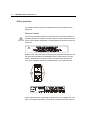
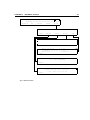
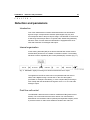
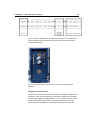
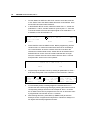
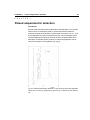
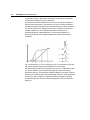
electrical current is amplified by the current-potential (I/E) converter (Fig. 11).
Fig. 11. DECADE II signal processing from electrochemical flow cell to output.
The signal from the I/E converter can be compensated with auto zero or
offset, and is digitised using a 24 bits ADC. In the CPU the signal is
processed, for example noise filtering, or more complex data processing in
PAD. Finally after the 20 bits DAC the signal is set to a 1 or 10 V full scale
analogue output.
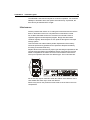
Dual flow cell control
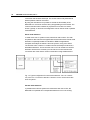
The DECADE II electronics are located on 2 different PCB's (printed circuit
boards). The control board and the sensor board. The control board is
dedicated to communication with PC (RS232) and keyboard & display. It has
a processor with a so called 'event handler' that takes care of all user