1
1.
1.0. Chlorophyll Fluorescence Measurement.
The FMS 2 is a powerful tool for photosynthesis research. However, to fully utilise
its functionality and achieve optimum performance it is important to appreciate the
measurements that FMS 2 is designed to make and some of the principles behind its
operation. The following introductory sections are only intended as a very limited
introduction to chlorophyll fluorescence measurement, more comprehensive
information can be found from the references cited in the text.
1.1. What is chlorophyll fluorescence?
When light energy is absorbed by a chlorophyll molecule the electronic configuration
of the molecule is temporarily altered. This “excited” configuration is inherently
unstable and short lived (typically less than 10-8 sec) as several processes compete to
dissipate the absorbed energy. In photosynthetic systems these processes can be
categorised into two groups:
Photochemical Processes:
These processes utilise absorbed energy for photochemistry, during which electron
donation from pigment to an acceptor molecule occurs. Such processes direct energy
for the chemical work involved in photosynthesis.
Non-Photochemical Processes:
These processes dissipate energy from the photosynthetic apparatus in a manner
which does not drive photosynthesis. Energy is usually re-emitted from the sample
in the form of infra-red radiation (heat) and red / far-red radiation which is known as
chlorophyll fluorescence.
The competition between these processes for absorbed energy ensures that a
reduction in the rate of one process will be associated with a corresponding increase
in the rates of competing processes e.g. a reduction in the dissipation of energy by
photochemistry will be reflected in an increase in energy dissipation by nonphotochemical processes such as heat production and chlorophyll fluorescence.
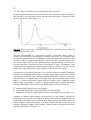
Consequently measurement of changes in the extent of fluorescence emission with
FMS 2 can be used to infer information about changes in the efficiency of light use
for photochemistry (Reviewed in Krause and Weis 1991 and Govindjee 1995)
Since the work of Emerson et al. (1932) it has been widely accepted that there are
two separate photochemical steps during photosynthesis which are associated with
different groups of pigments; these groups have become known as photosystem I and
photosystem II. In practice differences in the functionality of photosystem I and II
mean that at least 95% of the chlorophyll fluorescence signal observed under
physiological temperatures is derived from chlorophyll molecules associated with
photosystem II (PSII). Hence the fluorescence signal detected by FMS reflects
changes in the efficiency with which absorbed light is used for PSII photochemistry.