1
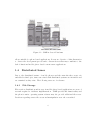
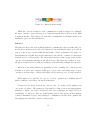
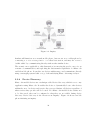
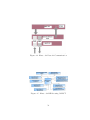
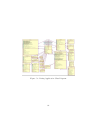
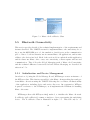
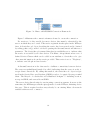
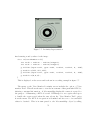
Figure 4.1: JXTA Network
JXTA was initiated by Sun Microsystems to enable further P2P application development in Java. The advantages of P2P systems have become obvious with scalability
being a driving factor. JXTA aims to provide a set of simple, small and flexible mechanisms to support P2P computing on various platforms. The basic architecture provides
six protocols defined in XML. Nodes implementing any of these protocols are referred
to as peers. Data, known as messages, are transferred via Pipes which are virtual
communication channels. Peers offer services to other peers in which Codats, content,
can be published, discovered and replicated as required. The architecture of a JXTA
network is illustrated by figure 4.1.
The six protocols that underlie the JXTA project are
• Peer Discovery Protocol -used to discover all published resources.
• Peer Resolver Protocol -used to locate some service or content.
• Peer Information protocol -used to ping a peer.
• Peer Membership Protocol -used to join or leave peer groups.
• Pipe Binding Protocol -peers use pipes to access services.
• Endpoint Routing Protocol -used to route messages to a destination.
43