1
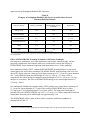
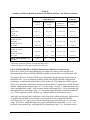
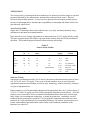
Table 13
Final Height Minus Baseline Predicted Height: Idiopathic Short Stature Trials
Placebo-controlled Trial
3x per week dosing
Dose Response Trial
6x per week dosing
HUMATROPE HUMATROPE
HUMATROPE
Placebo
0.22 mg/kg*
0.24 mg/kg*
0.24/0.37 mg/kg*
(N=10)
(n=22)
(n=13)
(n=13)
-0.7
+2.2
+5.4
+6.7
FH - Baseline PH
(3.6, 2.3)
(0.4, 3.9)
(2.8, 7.9)
(4.1, 9.2)
Mean cm (95% CI)
Abbreviations: PH= predicted height; FH=final height; CI = confidence interval
* Total weekly dosage
HUMATROPE
0.37 mg/kg*
(n=13)
+7.2
(4.6, 9.8)
Effect of HUMATROPE Treatment in Patients with SHOX Deficiency
SHOX deficiency may result either from a deletion of one copy of the short stature homeoboxcontaining gene (SHOX) or from a mutation within or outside one copy of the SHOX gene that
impairs the production or function of SHOX protein. The SHOX gene is located on the
pseudoautosomal region of the X chromosome. Haploinsufficiency of the SHOX gene causes
short stature analogous to the short stature seen in patients who have Turner syndrome, since
these patients also lack one copy of the SHOX gene, due to absence or structural alterations of
the second sex chromosome.
A randomized, controlled, two-year, three-arm, open-label study was conducted to evaluate the
efficacy of HUMATROPE treatment of short stature in pediatric patients with SHOX deficiency
who were not GH deficient. Fifty-two patients (24 male, 28 female) with SHOX deficiency, 3.0
to 12.3 years of age, were randomized to either a HUMATROPE-treated arm (27 patients; mean
age 7.3 ± 2.1 years) or an untreated control arm (25 patients; mean age 7.5 ± 2.7 years). To
determine the comparability of treatment effect between patients with SHOX deficiency and
patients with Turner syndrome, the third study arm enrolled 26 patients with Turner syndrome,
4.5 to 11.8 years of age (mean age 7.5 ± 1.9 years), to HUMATROPE treatment. All patients
were prepubertal at study entry. Patients in the HUMATROPE-treated group(s) received daily
subcutaneous injections of 0.05 mg/kg of HUMATROPE. Patients in the untreated group
received no injections.
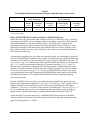
Patients with SHOX deficiency who received Humatrope had significantly greater first-year
height velocity than untreated patients (8.7 cm/year vs. 5.2 cm/year, p < 0.001, primary efficacy
analysis) and similar first-year height velocity to Humatrope-treated patients with Turner
syndrome (8.7 cm/year vs. 8.9 cm/year; least-squares mean difference 0.5 cm/year [95% CI, -1.3
to 0.7]). In addition, patients who received Humatrope had significantly greater second year
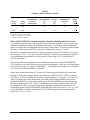
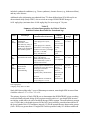
height velocity, and first and second year height gain than untreated patients (Table 12).
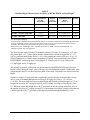
At the end of the 2-year study period, 41% of HUMATROPE-treated subjects with SHOX
deficiency and 31% of subjects with Turner syndrome had achieved height within the normal
range for age and gender (>-2.0 SDS).
HUMATROPE Product Monograph
Page 35 of 58