1
These objects enter our formalization as parameters of the various actions
which are described in the following sections. In a systematic documentation of
the requirements elicitation one has to list explicitly the complete signature; the
basic objects have to be dened through the lexicon, their properties as well
as the conditions imposed on the operations have to be listed systematically,
making sure that the list is complete and correct with respect to the application
domain information which underlies [Light 1999b]. We abstain from doing this
here; any reliable, systematic method can serve this purpose.
3.2
User interactions (Manual light control)
[Light 1999b] states in Section 2.1-2.4, Paragraphs 7-11 that every room has two
wall switches, one for the wall ceiling light group and the other for the window
ceiling light group. The behavior, if the corresponding push button is pushed, is
formulated in Section 2.1.2 as follows.
1. If the ceiling light group is completely on, it will be switched o.
2. Otherwise it will be switched on completely.
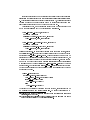
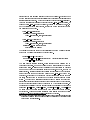
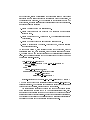
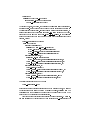
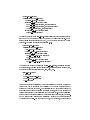
We capture this requirement with the rule Room wall button . This rule is parameterized over a room and a light group. The fact that pressing the button is
an external event over which the system has no control is reected by an event
function lightgroup wall button pressed which is supposed to become true when
the corresponding button has been pressed and to become false when the rule
res whose guard contains the event function (PushButtonReq)1 . This interpretation resolves the incompleteness of the denition for push button in the
dictionary where it is not made clear when the light eect should take place, at
the beginning or at the end of the possibly prolonged button pushing action.
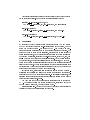
Room wall button (room; lightgroup) =
if lightgroup wall button pressed (room; lightgroup) then
if lightgroup is completely on (room; lightgroup) then
Switch lightgroup o (room; lightgroup)
else
Switch lightgroup completely on (room; lightgroup)
Notation: We use italic font for rules and functions. Rule names always start
with an initial capital letter and function names with a lower case letter. Local
variables are denoted in roman font and we use typewriter for constants.
[1] Such additional requirements are provided for the purpose of a systematic documentation of all the decisions taken to interpret or extend the requirements in
[Light 1999b].