1
C2.1. IP addresses.
An IP address is a number that logically and hierarchically identifies an interface of a device in
a network that uses the IP protocol. The format used is X.X.X.X, where each X represents a
group of eight bits translated into decimal form—that is, whose minimum value is 0.0.0.0 and
whose maximum value is 255.255.255.255.
IP addresses are classified in two major groups: static and dynamic.
• It is typical for a user to connect to the Internet from his or her home using an IP
address. This address may change when the user reconnects, and this manner of
assigning IP addresses is called a dynamic IP address (normally abbreviated as
dynamic IP).
• The Internet sites that, by nature, need to be continuously connected generally have a
static IP address (as with the dynamic address, a similar abbreviated form is used:
static or fixed IP)—that is, an address that does not change over time.
Another possible IP address classification can be made according to address validity:
•
•
Public: IP addresses that are valid in the entire Internet network. Currently, due to the
poor management that has traditionally been applied to the available IP addresses, they
are a scarce, highly costly resource.
Private: addresses that are only valid in a closed section of the IP network, typically
corporate and not subject to free access, with only one point of connection to the
Internet, called a gateway, constituted by a router.
C2.2. Unicast vs. Multicast.
Unicast is the transmission of information from a single sender to a single receiver. It is
distinguished from multicast (transmission to certain specific recipients—more than one—from a
single sender), broadcast (in which the recipients are all the stations in the network) and
anycast (transmission to a single recipient—any unspecified recipient).
The unicast method is the one currently being used on the Internet, and is applied for both live
and on-demand transmissions. The multicast method can only be used in corporate
environments, despite some isolated efforts to introduce it on the Internet, and is applied only
for live transmissions.
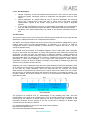
Graphic Comparison: Unicast vs. Multicast
The effect that unicast transmission has on network resources is accumulative consumption.
Each user who connects to a multimedia transmission consumes as many kilobits per second
as the content encoding will permit.
117
AEQ PHOENIX STRATOS