1
Chapter-2
2.1 WIRESHARK
The basic tool for observing the messages exchanged between executing protocol entities is
called a packet sniffer. Packet sniffer captures (“sniffs”) messages being received from
computer; it will also typically store and/or display the contents of the various protocol fields in
these captured messages. A packet sniffer itself is passive. It observes messages being sent and
received by applications and protocols running on your computer, but never sends packets itself.
Similarly, received packets are never explicitly addressed to the packet sniffer. Instead, a packet
sniffer receives a copy of packets that are sent by application and protocols executing on
machine.
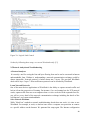
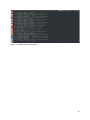
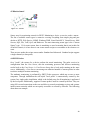
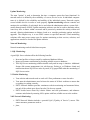
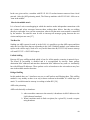
Figure 2.a shows the structure of a packet sniffer. At the right of Figure 2.aare the protocols (in
this case, Internet protocols) and applications (such as a web browser or ftp client) that normally
run on your computer. The packet sniffer, shown within the dashed rectangle in Figure 3.a is an
addition to the usual software in your computer, and consists of two parts. The packet capture
library receives a copy of every link-layer frame that is sent from or received by your computer.
The messages exchanged by higher layer protocols such as HTTP, FTP, TCP, UDP, DNS, or IP
all are eventually encapsulated in link-layer frames that are transmitted over physical media such
as an Ethernet cable. In Figure 2.a, the assumed physical media is an Ethernet, and so all upper
layer protocols are eventually encapsulated within an Ethernet frame. Capturing all link-layer
frames thus gives you all messages sent/received from/by all protocols and applications
executing in your computer.
Figure 2.a :Packet sniffer structure
21