1
6.32
Using the standard IO facilities
171
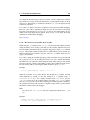
into its initial position upon reception of the next character, so a "new line" of text
can be displayed. Therefore, a received newline character is remembered until more
characters have been sent by the application, and will only then cause the display to be
cleared before continuing. This provides a convenient abstraction where full lines of
text can be sent to the driver, and will remain visible at the LCD until the next line is
to be displayed.
Further control characters could be implemented, e. g. using a set of escape sequences.
That way, it would be possible to implement self-scrolling display lines etc.
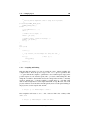
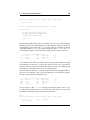
The public function lcd_init() first calls the initialization entry point of the lowerlevel HD44780 driver, and then sets up the LCD in a way we’d like to (display cleared,
non-blinking cursor enabled, SRAM addresses are increasing so characters will be
written left to right).
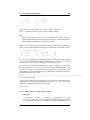
The public function lcd_putchar() takes arguments that make it suitable for being passed as a put() function pointer to the stdio stream initialization functions and
macros (fdevopen(), FDEV_SETUP_STREAM() etc.). Thus, it takes two arguments, the character to display itself, and a reference to the underlying stream object,
and it is expected to return 0 upon success.
This function remembers the last unprocessed newline character seen in the functionlocal static variable nl_seen. If a newline character is encountered, it will simply set
this variable to a true value, and return to the caller. As soon as the first non-newline
character is to be displayed with nl_seen still true, the LCD controller is told to clear
the display, put the cursor home, and restart at SRAM address 0. All other characters
are sent to the display.
The single static function-internal variable nl_seen works for this purpose. If multiple LCDs should be controlled using the same set of driver functions, that would not
work anymore, as a way is needed to distinguish between the various displays. This is
where the second parameter can be used, the reference to the stream itself: instead of
keeping the state inside a private variable of the function, it can be kept inside a private
object that is attached to the stream itself. A reference to that private object can be attached to the stream (e.g. inside the function lcd_init() that then also needs to be
passed a reference to the stream) using fdev_set_udata(), and can be accessed
inside lcd_putchar() using fdev_get_udata().
6.32.3.7 uart.h Public interface definition for the RS-232 UART driver, much like
in lcd.h except there is now also a character input function available.
As the RS-232 input is line-buffered in this example, the macro RX_BUFSIZE determines the size of that buffer.
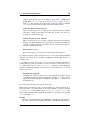
6.32.3.8 uart.c This implements an stdio-compatible RS-232 driver using an
AVR’s standard UART (or USART in asynchronous operation mode). Both, character output as well as character input operations are implemented. Character output
Generated on Mon Oct 9 22:30:53 2006 for avr-libc by Doxygen