1
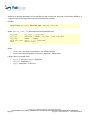
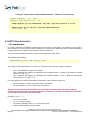
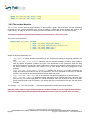
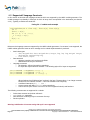
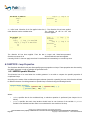
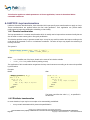
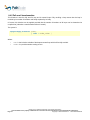
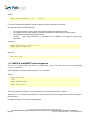
!$hmpp #define name value
The name can be any valid identifier. In the resulting code, the #define command is expanded to a single empty
line.
After a #define command, each occurrence of \name or \{name} in a HMPP or HMPPCG directive is replaced by
the specified value.
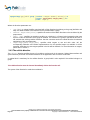
The following rules are applied during the definition of a macro:
•
•
•
•
•
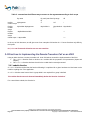
The first blank character (space or TAB) after “name” is not part of the value.
The trailing newline character is not part of the value.
In all directives, the characters \ can be escaped by doubling them as in \\.
No expansion is performed on the value before affecting the macro.
A ## sequence indicates that the tokens on the left and right must be concatenated, ignoring all
neighboring spaces (same semantic as in CPP).
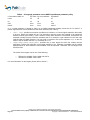
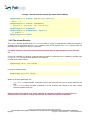
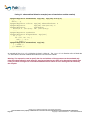
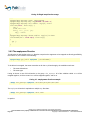
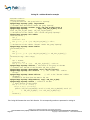
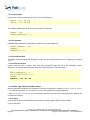
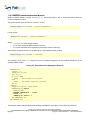
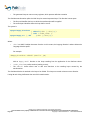
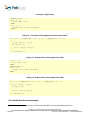
Example 1: A simple macro usage
!$hmpp #define NB 4
!$hmppcg unroll(\NB), noremainder
Becomes:
!$hmppcg unroll(4), noremainder
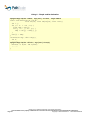
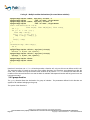
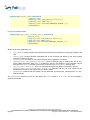
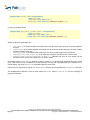
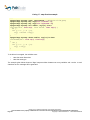
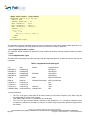
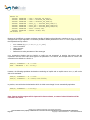
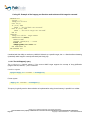
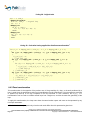
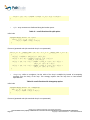
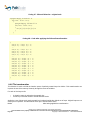
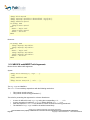
Example 2: In this example, the \X1 and \X2 are both extended to B because the \ARG in their value is expanded
during the callsite and not during the #define statements.
!$hmpp
!$hmpp
!$hmpp
!$hmpp
...
!$hmpp
#define
#define
#define
#define
ARG A
X1 \ARG
ARG B
X2 \ARG
Foo callsite , args[\X1;\X2].noupdate
Becomes:
…
!$hmppc Foo callsite , args[B;B].noupdate
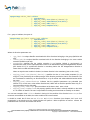
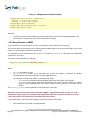
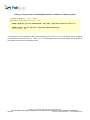
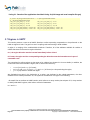
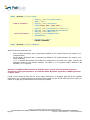
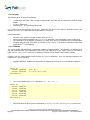
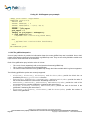
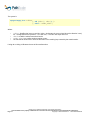
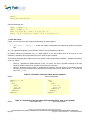
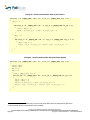
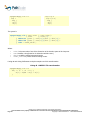
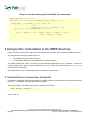
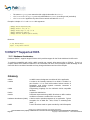
9.1.4 #DEFINE Command with Arguments A macro can be specified with a list of arguments as follows:
NVIDIA ® is a registered trademark of the NVIDIA Corporation
This information is the property of PathScale Inc. and cannot be used, reproduced or transmitted without authorization.
Page 84
Copyright © 2010 PathScale Inc. - DOC-ENZO08022010