1
Options:
At this point you can try some more functions that might improve the result:
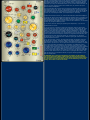
k) Knee (9)
Open the knee control and try if a soft knee setting is of advantage. The effect
of a soft knee setting is high with high ratio settings, but lower with lower
ration values, so don't expect a miracle.
l) Static Color (21) and Dynamic Color (19)
These controls add 2nd harmonics distortion to the output signal. The static
color control (21) adds a constant percentage of distortion, while the dynamic
color control (19) adds distortion that is proportional to the gain reduction.
Using this control you will get more distortion with peaks, which comes close to
the behavior of many vintage compressors. With many mixes, adding distortion
is not of advantage. However, depending on the program material adding a
little harmonics can produce a nice and interesting color. (The U794 Harmonics
Distortion Generator offers more possibilities for adding harmonics.)
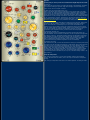
m) GR-Limit (20)
The GR limit control allows controlling the maximum gain reduction. Setting this
control to 5 dB, for instance, results in a compression that stops at higher
levels. This features is of advantage if you use a multi-compression; for
instance if you use the limiter section for compression of the high level range
with an entirely different setting. Adding 'pressure' and 'density' by raising the
average level below the peaks is also possible; however, the pump-up
compressot (see Expander section), is better suited for this purpose.
n) Regulation Reverse (30)
The compressor section is feedforward controled. The Reverse switch (30)
selects feedback control instead. The behavior of the compressor changes with
this setting; however, Threshold and Ratio settings are affected and the Gain
and Autogain will now also alter the Threshold. The compression is closer to
commonly used vintage compressors. In total with a setting as described
above, feedforward regulation is better suited. However, with more
conventional settings, feedback regulation can be of advantage.
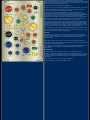
o) Release Law (12a)
The Release Law (12a) controls the characterics during the release phase. With
a setting all to the left (EXP) the behavior is exponential, which means that the
increase in level is controlled by the discharge curve of a capacitor. In the
beginning the level raises fast and gets slower the closer the value gets to the
steady value. The other setting (LIN) causes that the level increases with
constant speed. This setting will result in the impression of a shorter release
time without the the release control (12) is changed. Both settings can be
controlled from EXP to LIN with the pot. Try out, if another setting results in an
improvement.
Pump-Up Compressor
The pump up compressor is one of three possible modes of the expander
section. We start with this mode, since it can improve the above compressor
setting.
The pump up compressor works like an reversed expander. It adds gain when