1
43
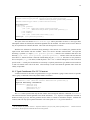
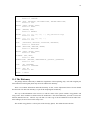
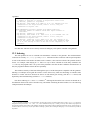
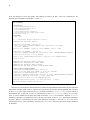
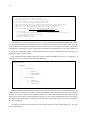
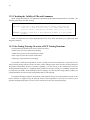
(define-feature-type noun (pronoun proper common))
(define-feature-type pronoun (personal-pronoun question-pronoun
demonstrative-pronoun quantified-pronoun))
(define-feature-type common (count-noun mass-noun))
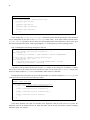
The grammar becomes:
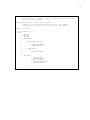
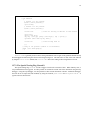
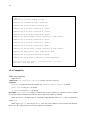
((cat noun)
(alt (((cat pronoun)
(cat ((alt (question-pronoun personal-pronoun
demonstrative-pronoun quantified-pronoun)))))
((cat proper))
((cat common)
(cat ((alt (count-noun mass-noun))))))))
And the input: ((cat personal-pronoun))
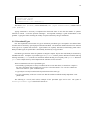
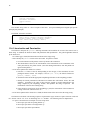
The syntax of the new function define-feature-type will be presented in section 9.2. Once types and a
subsumption relation are defined, the unification algorithm must be modified. The atoms X and Y can be unified if
they are equal OR if one subsumes the other. The result is the most specific of X and Y.
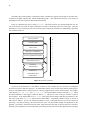
With this new definition of unification, taking advantage of the structure over constants, the grammar and the
input become much smaller and more readable. There is no need to introduce artificial labels. The input FD
describing a pronoun is a simple ((cat personal-pronoun)) instead of the redundant chain down the
hierarchy ((cat noun) (noun pronoun) (pronoun personal)). Because values can now share the
same label CAT, mutual exclusion is enforced without adding any pair [l:NONE].10 Note that it is now possible to
have several pairs [a:vi] in an FD F, but that the phrase ‘‘the a of F’’ is still non-ambiguous: it refers to the most
specific of the vi. Finally, the fact that there is a taxonomy is explicitly stated in the type definition section whereas
it used to be buried in the code of the FUG. This taxonomy is used to document the grammar and to check the
validity of input FDs.
9.1.2. Typed Constituents: The FSET Construct
A natural extension of the notion of typed features is to type constituents: typing a feature restricts its possible
values; typing a constituent restricts the possible features it can have.
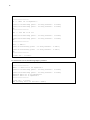
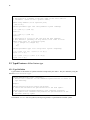
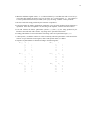
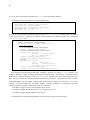
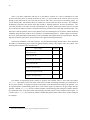
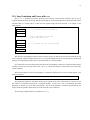
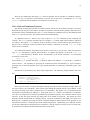
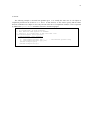
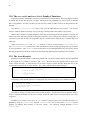
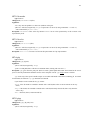
Type declarations (in the grammar):
(determiner ((fset (definite distance demonstrative possessive))))
Input FD describing a determiner:
(determiner ((definite yes)
(distance far)
(demonstrative no)
(possessive no)))
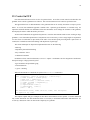
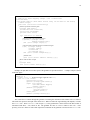
The fset feature specifies that only the four features listed can appear under the constituent determiner.
This statement declares what the grammar knows about determiners. Fset expresses a completeness constraint as
defined in LFGs [8]; it says what the grammar needs in order to consider a constituent complete. Without this
construct, FDs can only express partial information. The exact syntax of fset is given in Section 9.3.
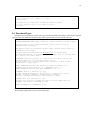
10
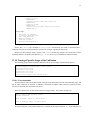
In this example, the grammar could be a simple flat alternation ((cat ((alt (noun pronoun personal-pronoun ... common mass-noun
count-noun))))), but this expression would hide the structure of the grammar.