1
Reported (measured) data
Reference data
Case
En
No
val
val
unc
val
val
unc
1
106.7
101
24
1067
0
109
2
1862
18035
36
186 1
17786
182
-1.3
3
230 6
0
0
230.6
236
85
2.4
4
609.2
0
0
609.2
34921
339
103.
5
609 3
73073
437
609 6
37566
335
-644
Area
En
Area
Z-score
Z-score
rep
ref
-09
-1 5
-177
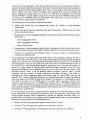
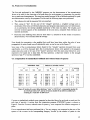
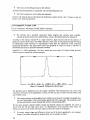
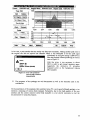
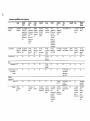
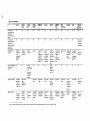
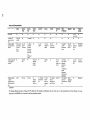
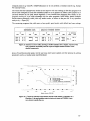
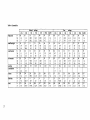
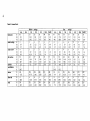
Case No. 1: The Area reported by the program is 0. That means, this peak at 106 7 keV was not
detected by the program In this case the Z-score is calculated from the reference spectrum value
alone (Zref) If the peak m the reference spectrum has a large uncertainty, therefore the contribution
to the (Zref) will be small, as in this case. Meaning, this peak is not so important m terms of
information that might be extracted from it. So "penalisation" for missing it should not be large In
the opposite case, the program is substantially penalized with a high Zref value, because a significant
peak has been missed And the case is counted for the missed peaks category
Case No. 2: Both areas are different from zero. In this case, the program found a true peak at 186 2
keV This category was classified as Matches. The Z-score is calculated using both the reported
uncertainty (Zrep) and the uncertainty from the reference spectrum (Zref). The fact that values for Zscores are nonzero means that the reported and reference areas are not the same. As long as the
difference between the reported area and the reference one are in statistical control, the calculated Zscores should be low (average value 0, standard deviation 1). Otherwise, the program is penalised
because of an erroneous peak area calculation.
Case No. 3 The area for this peak in the reference spectrum is 0 That means at 230.6 keV was
considered not to be any peak in the reference spectrum This category was classified as False Hits
If the reported uncertainty of the program for that false hit peak is large, then the contribution to the
Zrep will remain low. Illustrating one of the main ideas of the mtercompanson (see Introduction
Chapter), that is, "it is not as bad whether the programs detects or not a peak as much as it detects it
with its corresponding uncertainties" That is telling to the user- "look there might be or not a peak,
it is up to you to decide, and be careful extracting any information from it".
In the opposite case, the program that finds a "doubtful" peak and reports it with great conviction
(small uncertainties) should be heavily penalised, because of such bad habit.
This case gives no contribution to the Z^ value.
Cases No. 4 and 5' This is an interesting example where a false hit and bad area calculation are
present It arises from wrong deconvolution of a very significant peak at 609 3 keV. In this case that
peak has been wrongly sphtted in two peaks: 609.2 and 609 3 keV Therefore the program was
penalized twice, once for making a FALSE HIT at 609.2 keV and second because a wrong reported
value for the area of highly significant peak at 609.3 has been calculated. In this case a significant
contribution is made to both Z-scores.
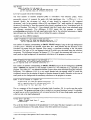
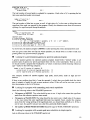
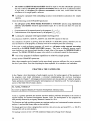
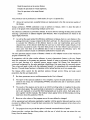
The CMPSPEC program also reported the following statements after every table of analysis of the
results'
17