1
SFM-3/4 User’s Manual (ver 1.1)
14 TEST REACTIONS
14.1 Alkaline Hydrolysis of 2,4-Dinitrophenyl Acetate (DNPA)
A complete description of the alkaline hydrolysis of 2,4-dinitrophenyl acetate (DNPA) can be found
in: Gutfreund, H. (1969), Methods in Enzymology, 16, 229-249.
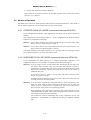
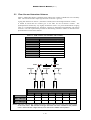
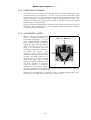
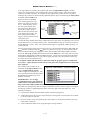
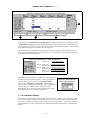
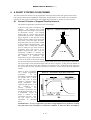
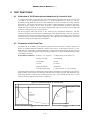
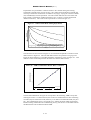
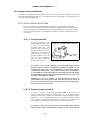
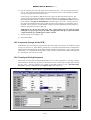
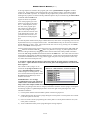
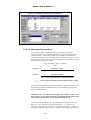
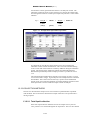
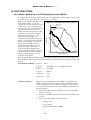
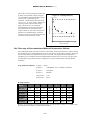
Figure 76 – DNPA/DNP Absorbance Spectra
DNPA + HCl
DNP pH 7.0
DNP + HCl 2mM
DNP + HCl 100mM
1.5
Absorbance
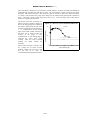
DNPA can be hydrolyzed by OH- to 2,4dinitrophenol (DNP). At 20°C the
reaction has a second order rate constant
in water of 56 M-1s-1. Conditions can
easily be set to make the concentration of
OH- sufficiently larger than that of
DNPA so that the reaction occurs under
pseudo first-order conditions with an
apparent rate constant, kapp, of 56 s-1 ×
[OH-] (NOTE: The [OH-] is the
concentration of OH- after mixing with
DNPA). The reaction can be quenched
at any time by addition of excess acid
and the amount of DNP produced
determined by absorbance at 325nm.
Figure 76 shows the absorbance
spectrum of DNPA and DNP under
various conditions of pH. It can be see
that the absorbance spectrum of DNP
changes with pH, but there is a clear
isobestic point at 325nm.
1.0
0.5
0
250
300
350
400
450
Wavelength (nm)
These properties make the alkaline hydrolysis of DNPA a useful tool for the testing of a quenchedflow instrument. The reaction can also be followed by the stopped-flow technique, omitting the acid
quench.
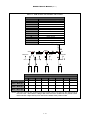
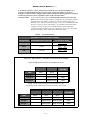
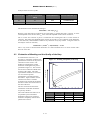
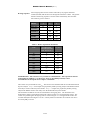
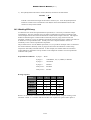
Experimental Conditions:
Syringe 1: Water
Syringe 2:
1 mM DNPA, 1%(v/v) DMSO, 2 mM HCl
Syringe 3:
1 M NaOH
Syringe 4:
2 M HCl
Delay Line 1: 17µl
Delay Line 2
Sample Preparation:
190µl
Make 1 ml of 100 mM DNPA in fresh DMSO (22.6 mg DNPA/ml
DMSO; The solution may turn slightly yellow as the DNPA dissolves.
As the solution ages, the yellow color will intensify. For best results,
it is recommended to use the freshest possible DMSO and prepare new
samples each day.).
1) Prepare a 2 M HCl solution by mixing 8.3 ml concentrated HCl
with 50 ml of water.
2) Prepare a 1 M NaOH solution by dissolving 2g of NaOH in 50 ml
of water.
3) Prepare the working DNPA solution by mixing
49.45 ml water
50 µl 2 M HCl
500 µl 100 mM DNPA in DMSO
14–91