1
1
Input Peer
Local data
Input Peer
Secret Sharing
Local data
Local data
Domain 3
INTRODUCTION
Privacy Peers
(simulated TTP)
Domain 2
Domain 1
2
Privacy-Preserving
Computations
Aggregate
statistics
Input Peer
Private data
(known to a single domain)
Secret data
(nobody knows)
Public data
(known to all domains)
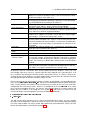
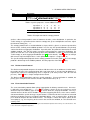
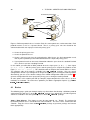
Figure 1: SEPIA deployment scenario. The privacy peers simulate a trusted third party (TTP).
1
Introduction
SEPIA1 is a Java library for secure multiparty-computation (MPC). It is designed to achieve high
performance for parallel execution of private operations.
A typical deployment scenario for SEPIA is depicted in Fig. 1. A number of independent network
domains are observed by some type of network probe. The probe could, for instance, produce
NetFlow records, SNMP inventory data, or IDS alert logs. Although the individual network data is
sensitive and therefore kept secret, the networks could substantially benefit by aggregating their
data with data from other networks for alert correlation, collaborative anomaly detection, multidomain traffic engineering, or collecting network performance statistics. For example, they might
be interested in whether other networks see similar intrusion alerts or not. Yet, they would never
just hand over their alerts. But if a network operator knew that indeed, other networks are attacked
by the same group of hackers, they might be willing to cooperate in order to come up with a more
effective collaborative defense. What operators could do, is installing SEPIA input peers in their
premises. Input peers take sensitive local data and share it over the group of SEPIA privacy peers.
The privacy peers (PPs) together simulate a trusted third party (TTP). That is, each privacy peer
gets only one share of each data item. From this share, the PP cannot derive any information
about the original data. Only if a majority of PPs comes together and combines their shares, they
can reconstruct the information. In addition, the PPs can perform any computation on the shared
secrets without reconstructing intermediate values. When the computation has finished, the PPs
reconstruct the final result (for instance all intrusion alerts reported by three or more networks) and
reveal it to the input peers. These will then use this information for improving network management.
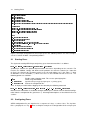
SEPIA’s overall architecture is shown in Fig. 2. SEPIA consists of a library and a set of commandline (CLI) tools. The library implements basic operations on shared secrets, such as addition,
multiplication and comparison of values. Furthermore, it provides functionality to connect participants of the computation. On top of the basic library, four CLI tools are implemented. These tools
implement ready-to-use high-level protocols such as the aggregation of arbitrary network events
and the computation of common network statistics.
1 SEPIA
stands for Security through Private Information Aggregation.