1
CHAPTER 1
COMPUTER HARDWARE STARTUP
LEARNING OBJECTIVES
Upon completing this chapter, you should be able to do the following:
Describe the different components of a computer system.
Describe how to startup a computer system.
Describe how to set parameters for operation and how to perform and
interpret diagnostic tests.
Explain what is involved in inspecting components, running system checks
and troubleshooting error conditions.
Explain how to perform computer interface changes, CMOS changes and
configuration changes.
Describe how to inspect, repair and install cables.
Explain how to install computer equipment and prepare computers for
shipment.
We receive information in many different forms,
from our eyes, ears, nose, mouth, and even sensory
nerves. Our brains receive and accept this information,
work with it in some form or fashion, and then store it
away somewhere in the back of our minds (memories)
for future use. If what we are processing at the time
requires immediate attention, our minds direct us to
respond with words or actions. The computer’s brain
(the central processing unit) is designed to do basically
the same thing. That is, it receives information (input
data), works with this information (processes data), and
transmits this information (output data) to some form of
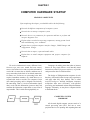
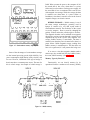
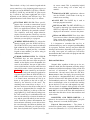
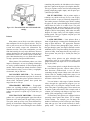
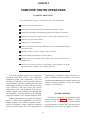
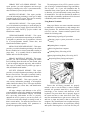
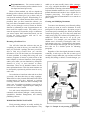
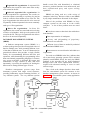
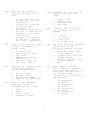
output media. This is often shown graphically as:
Computers do nothing more than what we instruct
them to do. They simply follow a set of internally stored
instructions (called a program or software) we provide
and process the data we feed into them.
The design of fifth-generation computers is such
that they will actually learn from previous experiences
and apply what they have learned. This is called
artificial intelligence. Artificial intelligence computers
manipulate data more efficiently, with parallel
processing, and understand written and spoken human
language. Ultimately, we may have a computer similar
to the human brain.
COMPUTER SYSTEM
HARDWARE
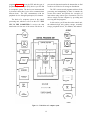
All electronic digital computer systems consist of a
central processing unit (CPU) and one or more
peripheral devices for inputting and outputting data and
1-1