1
·
190
9.
A. Asperti and W. Ricciotti and C. Sacerdoti Coen
LOGICAL RESTRICTIONS
In this section we shall discuss some of the logical restrictions of the logical system
required for preserving consistency. At the same time, we shall provide a more
detailed and precise exposition of the Calculus of Inductive Constructions. In order
to fully understand all nuances of the type system, the reader is invited to read the
description of the Matita kernel in [5].
9.1
Positivity in inductive definitions
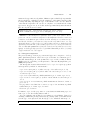
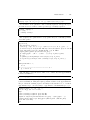
Not every inductive definition is accepted by Matita. The following is a typical
example:
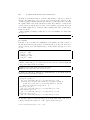
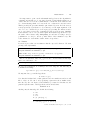
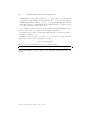
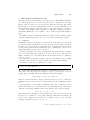
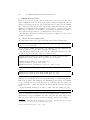
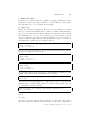
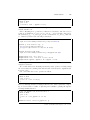
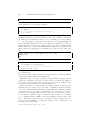
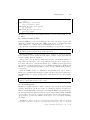
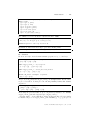
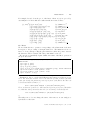
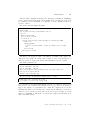
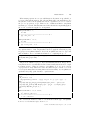
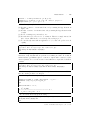
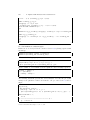
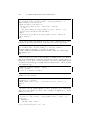
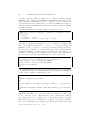
inductive D : Type[0] :=
lam: (D → D) → D.
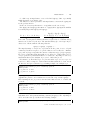
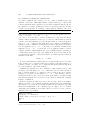
which is rejected by the system with the following error message:
Error: Non positive occurence in ((D → D) → D).
The definition of D should be quite familiar: for instance, in order to build a model
for the λ-calculus, one needs a domain D that is isomorphic to its own function space
D → D (each term is also a function), and one could be tempted to simply define it
as the smallest type D for which there exists an embedding (D → D) → D.
Suppose we accept such a definition. We would then expect to be able to reason
by case-analysis on an object d:D. In particular, d must reduce to the form lam f
for some function f and we would expect to be able to extract this information out
of d by means of the usual pattern matching operation.
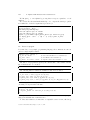
This is all we need to write a function that, given two terms in D, interprets
the first as a function (i.e. unboxes the embedded function) and applies it to the
second.
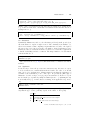
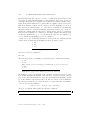
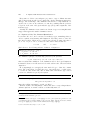
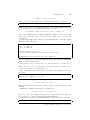
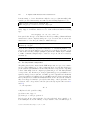
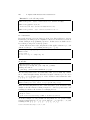
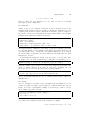
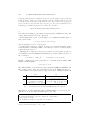
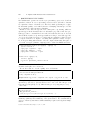
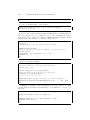
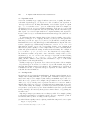
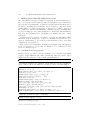
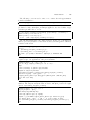
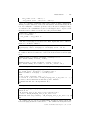
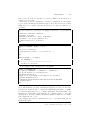
definition app : D → D → D :=λd,e. match d with [lam f ⇒ f e].
At this point it should be clear that what we are really doing is embedding the λcalculus into CIC. More importantly, our embedding reuses the binding structures
of CIC to express binding in the object calculus. For instance, we can easily express
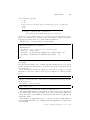
the familiar duplicator term of the λ-calculus (i.e. λx.x x) as follows:
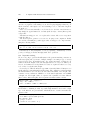
definition dup : D :=lam (λx:D. app x x).
However, our embedding goes beyond that: we can even reuse reduction in CIC
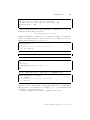
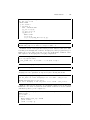
to express reduction in the object λ-calculus. Since the λ-calculus admits nonterminating terms, making the definition of D legal has surreptitiously added nonterminating computations into CIC as well. Let for example:
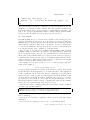
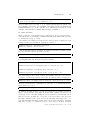
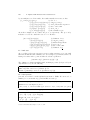
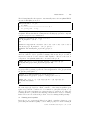
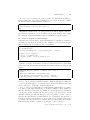
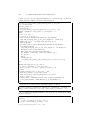
definition omega : D :=app dup dup.
Then,
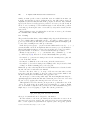
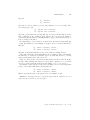
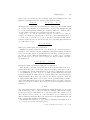
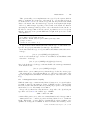
omega = app dup dup = (λx:D.app x x) dup = app dup dup = omega
hence omega would reduce to itself, resulting in a non-terminating computation!
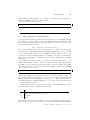
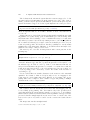
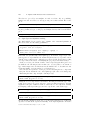
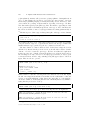
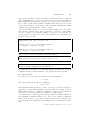
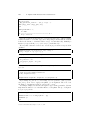
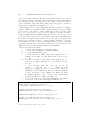
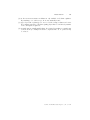
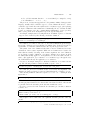
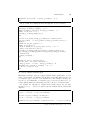
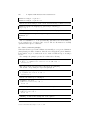
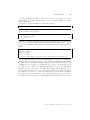
So, what is so dangerous with non-termination? Consider for instance the following definitions:
Journal of Formalized Reasoning Vol. 7, No. 2, 2014.