1
Solution of simultaneous linear algebraic equations 617
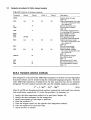
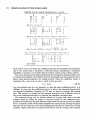
Table 20.7
Side
nodes
5
10
20
40
80
Non-zeros in K
Number of
equations
375
3000
24000
192000
1536000
Profile storage data
Words (x
Mbytes
Col. Ht.
Words ( x
Mbytes
0.02
0.12
0.96
7.68
61.44
0.12
0.96
7.68
61.44
491.52
90
330
1260
4920
18440
0.03
0.99
30.24
944.64
28323.84
0.27
7.92
241.82
1551.12
226584.72
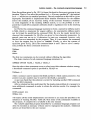
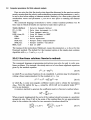
equations until the residual of the linear equations, given by
(20.53)
becomes less than a specified tolerance.
In order to be effective the number of iterations i to achieve a solution must be quite
small - generally no larger than a few hundred. Otherwise, excessive solution costs
will result. At the time of writing this book the subject of iterative solution for general
finite element problems remains a topic of intense research. There are some impressive
results available for the case where K is symmetric positive (or negative) definite;
however, those for other classes (e.g., unsymmetric or indefinite forms) are generally
not efficient enough for reliable use in the solution of general problems.
For the symmetric positive definite case methods based on a preconditioned
conjugate gradient method have been particularly effective.12-14 The convergence
of the method depends on the condition number of the matrix K - the larger the
condition number, the slower the convergence (see reference 9 for more discussion).
The condition number for a finite element problem with a symmetric positive definite
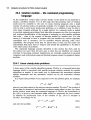
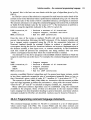
stiffness matrix K is defined as
(20.54)
where X1 and A, are the smallest and largest eigenvalue from the solution of the
eigenproblem (viz. Chapter 17)
K8
=8
A
(20.55)
in which A is a diagonal matrix containing the individual eigenvalues Xi and the
columns of @ are the eigenvectors associated with each of the eigenvalues.
Usually, the condition number for an elasticity problem modelled by the finite
element method is too large to achieve rapid convergence and a preconditioned
conjugate gradient (PCG) is used.” A symmetric form of preconditioned system is
written as
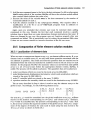
Kpz = PKPTz= Pb
(20.56)
PT z = a
(20.57)
where
Now the convergence of the PCG algorithm depends on the condition number of
Kp. The problem remains to construct a preconditioner which adequately reduces