1
Instruction manual
Tip: Do not correct for the background noise level!
Note that Swept-Sine method compensates for the
apparent background noise automatically. Therefore
do not attempt to make any further compensation for
the noise yourself, as you are used to do with conventional measurements!
What does the measured
BGN and SNR mean?
It is important to note that signal-to-noise ratio (SNR) obtained with Swept-Sine measurement is not the same as
SNR obtained with classical measurement. SNR in classical measurement is ratio between excitation signal and
background noise in the receiving room, at microphone
position. What is measured with the Swept-Sine technique is the SNR with processing gain included. It is SNR
in the measured impulse response which benefits from
the noise suppressing features of the technique. It is the
term which determines the reliability of the results.
A novelty in Swept-Sine based measurements is that
“?” symbol can be displayed with level results. However,
note that it does not have the same meaning as with reverberation results. Level report contains several displays.
Individual level values or level difference between channel 1 and 2 might be displayed.
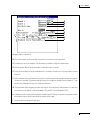
If an individual level value is marked with “?” this
means that the real value is less or equal to the measured
value. In other words the real value might be lower, but
we are not able to measure it because the noise hinder
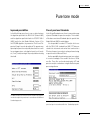
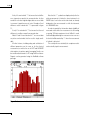
us. Example of individual level value marked with “?” is
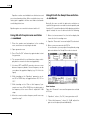
shown in figure 14.
If a level difference value is marked with “?” you need
to take a look at reliabilities of individual values of L1 and
L2 in order to draw a conclusion.
What does the “?” displayed with
level values mean?
User familiar with measurements of reverberation time in
classical measurement might note that reverberation time
results can be marked with “?” which means that results
are unreliable. This can be because reverberation time
is too short or background noise level is too high. Please
refer to main user manual for details on this. However, no
such indication of reliability was used with level results in
classical measurement.
Figure 14. Question mark with individual level value means
less or equal
page 27