1
2. DRAW
63
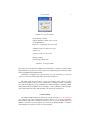
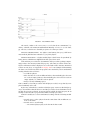
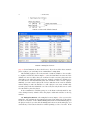
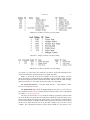
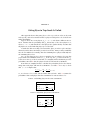
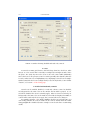
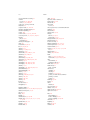
Figure 3. Deterministic draw
The article, “What is the correct way to seed a knockout tournament?”, by
Allen J. Schwenk, The American Mathematical Monthly, vol. 107, no. 2, Feb. 2000,
pp. 140–150, considers two desirable properties of a draw procedure:
Delayed Confrontation. Two players rated among the top 2j shall never
meet until the field has been reduced to 2j or fewer players.
Sincerity Rewarded. A higher-seeded player should never be penalized by
being given a schedule more difficult than that of any lower seed.
Schwenk then proves that the deterministic draw procedure (perhaps surprisingly) violates the Sincerity Rewarded property. (The ITTF procedure violates Delayed Confrontation unless all players are seeded and violates Sincerity Rewarded
if there are any byes; see Appendix E on page 139 for an example demonstrating
the latter.) He then shows that both properties are satisfied by cohort randomized
seeding, which works as follows:
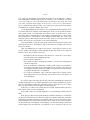
• Seed all the players.
• Place the first two seeds in different halves, then randomly place the next
two seeds in empty quarters, then randomly place the next four seeds in
empty eighths, etc., until all seeds are placed.
• Put byes in any remaining spaces.
This is similar to the ITTF procedure with all players seeded, except that byes are
placed randomly at the end.
By the way, Schwenk also considers a third property. However, this third property is less intuitive than the first two and his proof that cohort randomized seeding has the property is flawed. It appears that he added the third property in an
attempt to have the three properties determine a unique procedure.
Zermelo basically uses cohort randomized seeding, with the following modifications:
• Zermelo tries to place players from the same draw club in different sections of the draw.
• Zermelo tries to avoid having
– Two unrated players play each other in the first round