1
168
CHAPTER 10. DEBUGGING
The third issue noted above, synchronization complexity, is especially aggravated by concepts like priority inheritance and priority ceiling protocols, as
well as specifics of the scheduling policy (FIFO,round-robin,EDF, etc). Validating temporal behavior of a multi-threaded system relying heavily on thread
synchronization mechanisms can not be done without internal knowledge of the
core RTOS system, this is a limitation on the side of the developers not the
system and the only way out is that developers of RTOS systems need RTOS
knowledge to perform temporal system validation. Tools that do help are tracers (see below) but they don’t eliminate the demand for RT specific know-how
on the side of the developer.
The last two points noted above, recording overhead and time stamp limitations of the system, are also RT-system inherent. Recording the sequential instruction path of a system requires a certain processing overhead for the
recording instructions and the memory access for trace-data storage. Fortunately tracers have been developed that have a sufficiently small overhead (¡5
TRACE TOOLS
As the problems of temporal debugging are inherent in RTOS, the development
of tools to cope with these problems evolved fairly early in the various flavors
of hard-realtime Linux.
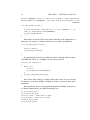
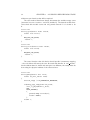
RTLinux tracer The RTLinux tracer, implemented by Michael Barabanov,
was the first approach to temporal debuging in hard real-time Linux extensions.
The basic concept is to have shared memory areas that provide a predefined
number of event-buffers, these event-buffers are continuously written to at critical points in the core OS and the application code. The application then can
trigger a trace by calling RTL TRACE FINALIZE, which then causes the tracer
to switch to the next free event-buffer and continue recording. This method
allows to backtrace temporal dependancies starting at the event of interest and
thus analize the hot-spots in the code. Naturally this can’t happen without a
cirtain overhead for the recording process, but this overhead is in the range of
1%.
The RTLinux tracer is integrated in the main RTLinux/GPL development
tree and is also part of the comercial RTLinux/Pro distribution.
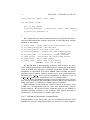
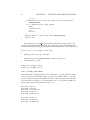
Linux Trace Tool kit, LTT LTT was originally developed for kernel
development of the mainstream Linux kernel and is still maintained for this
purpose, it is a good tool to move into the internals of the Linux kernel.
http://www.opersys.com/LTT/downloads.html
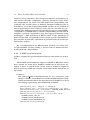
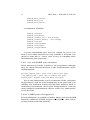
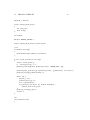
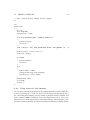
POSIX tracer The POSIX tracer is a kernel module that performs a similar event trace as the rtl tracer module. Debugging of complex rt-applications