1
830
IEEE/ACM TRANSACTIONS ON NETWORKING, VOL. 5, NO. 6, DECEMBER 1997
modes: one for hour timers, one for minute timers, etc. This
reduces PERTICKBOOKKEEPING overhead further at the cost
of a loss in precision of up to 50% (e.g., a 1-min and 30-s
timer that is rounded to 1 min). Alternately, we can improve
the precision by allowing just one migration between adjacent
lists.
Scheme 7 has an obvious analogy to a radix sort [7]. We
discuss implementation strategies for Scheme 7 in Appendix
A.
VII. UNIX IMPLEMENTATION
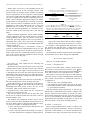
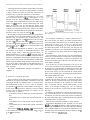
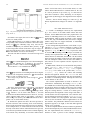
Fig. 8. The previous example, after the hour component of the timer expires
(using Scheme 7).
STOPTIMER: Once again, this can be done in
time if
all lists are doubly linked.
PERTICKBOOKKEEPING: It is useful to compare this to the
corresponding value in Scheme 6. Both have the same average
latency of
for sufficiently large array sizes but the
constants of complexity are different. More precisely: let
be the average timer interval (from start to stop or expiry); let
be the total amount of array elements available; and let
be the total number of levels in the hierarchy.
The total work done in Scheme 6 for such an average sized
timer is
where
is a constant denoting the cost of decrementing the
high order bits, indexing, etc., in Scheme 6. If a timer lives
for units of time, it will be decremented
times.
And in Scheme 7 it is bounded from above by
where
represents the cost of finding the next list to migrate
to, and the cost of migration, in Scheme 7; is the maximum
number of lists to migrate between.
The average cost per unit time for an average of timers
then becomes
— Scheme
— Scheme
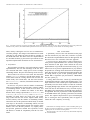
The choice between Scheme 6 and Scheme 7 will depend
on the parameters above. Since
and
will not be
drastically different, for small values of
and large values
of
, Scheme 6 can be better than Scheme 7 for both
STARTTIMER and PERTICKBOOKKEEPING. However, for large
values of
and small values of
, Scheme 7 will have a
better average cost (latency) for PERTICKBOOKKEEPING but a
greater cost for STARTTIMER latency.
W. Nichols has pointed out that if the timer precision is
allowed to decrease with increasing levels in the hierarchy,
then we need not migrate timers between levels. For instance,
in the example above, we would round off to the nearest hour
and only set the timer in hours. When the hour timer goes off,
we do the user-specified EXPIRYPROCESSING without migrating
to the minute array. Essentially, we now have different timer
A. Costello of Washington University has implemented
[8] a new version of the BSD UNIX callout and timer
facilities. Current BSD kernels take time proportional to the
number of outstanding timers to set or cancel timers. The new
implementation, which is based on Scheme 6, takes constant
time to start, stop, and maintain timers; this leads to a highly
scalable design that can support thousands of outstanding
timers without much overhead.
In the existing BSD implementation, each callout is represented by a callout structure containing a pointer to the
function to be called (c func), a pointer to the function’s
argument (c arg), and a time (c time) expressed in units
of clock ticks. Outstanding callouts are kept in a linked list,
sorted by their expiration times. The c time member of each
callout structure is differential, not absolute—the first callout
in the list stores the number of ticks from now until expiration,
and each subsequent callout in the list stores the number of
ticks between its own expiration and the expiration of its
predecessor.
In BSD UNIX, Callouts are set and canceled using routines
called timeout() and untimeout(), respectively.
The routine timeout(func, arg, time) registers
func(arg) to be called at the specified time; untimeout(func, arg) cancels the callout with matching
function and argument. Because the calltodo list must
be searched linearly, both operations take time proportional to
the number of outstanding callouts. Interrupts are locked out
for the duration of the search.
The Costello implementation is based on Scheme 6 described above. Unfortunately, the existing timeout() interface in BSD does not allow the passing of handles, which was
used in all our schemes to quickly cancel a timer. The Costello
implementation used two solutions to this problem. For calls
using the existing interface, a search for a callout given a
function pointer and argument is done using a hash table. A
second solution was also implemented: a new interface function was defined for removing a callout (unsetcallout())
that takes a handle as its only argument. This allows existing
code to use the old interface and new applications to use the
new interface. The performance difference between these two
approaches appears to be slight, so the hash table approach
appears to be preferable.
In the new implementation, the timer routines are guaranteed
to lock out interrupts only for a small, bounded amount of time.
The new implementation also extends the setitimer()
interface to allow a process to have multiple outstanding