1
7.2
Theory
We now understand the purpose and architecture of the PLL in the system, namely multiplying the external
clock. The details of choosing an oscillator are not yet clear.
We understand the purpose of the MAM in the system, namely bridging the speed gap between the flash
and the ARM core. The details of the timing and the purpose of the three buffers is not completely clear.
We have seen that code in RAM performs optimally.
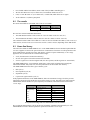
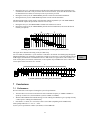
We have seen that STR instructions to slow GPIO SFRs perform really poor (non sequential accesses
delayed by the APB bus), and that STR instructions to fast GPIO performs much better. The slow GPIO is
even slower when the APB divider kicks in.
The details of why each instruction clocks as measured are not yet completely understood, but the theory
roughly matches the practice.
7.3
Future work
We used 32 bits ARM instructions. As a future step we could check the thumb instructions.
(end of doc)
16