1
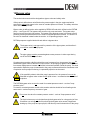
The pump must be placed on a sturdy, vibration-free foundation with a level surface and bolted
firmly to the foundation.
If the surface is not level, compensation must be made for this using a suitable intermediate
layer so that preloads are avoided.
Bolt the pump securely to the foundation.
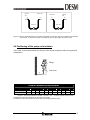
You must also take into account the pump’s suction lift – see section entitled: “Suction lift”
under “Technical specifications”.
If the pump has a soft shaft seal, a drainage pipe must be connected to the bracket’s drainage
hole.
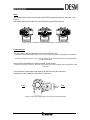
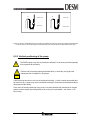
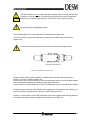
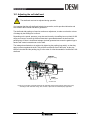
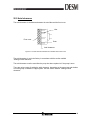
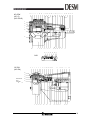
Vertical pumps are bolted securely to an existing wall or a vertically cast foundation. The
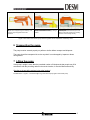
minimum distance between front cover and floor appears from Figure 18.
9.7 Before connecting the pipes
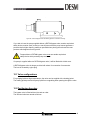
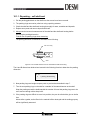
In order that the pump is able to draw, it must be filled with liquid before it is started.
Before the pipes are fitted, the pump is filled with a volume of liquid that enables the
liquid to start running out of the pump.
Vertically positioned pumps are filled with liquid after the pipes are connected.
Clean out any impurities from the pipe system before the pump is connected to it
Remove the protective plugs from the pump ports before connecting the pipes.
The pump must be installed so that there is no tension between the pipe and the pump casing.
The permitted loads on the pump flanges are described in the following section:
“External loads on pump flanges”.
9.7.1 External loads on pump flanges
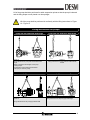
There must be no tensions between the pipe and the pump casing when the pump is installed.
Tension in the pump casing as a result of preloaded pipes will create a significant increase in
the rate of wear.
Pipes and wires must be supported as close to the pump casing as possible.
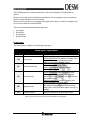
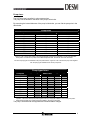
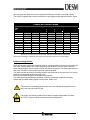
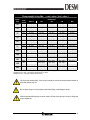
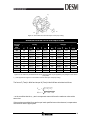
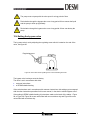
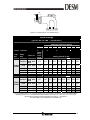
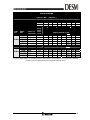
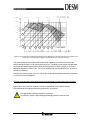
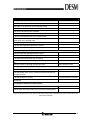
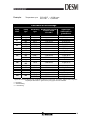
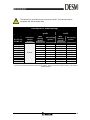
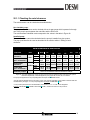
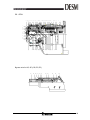
The diagram below shows the maximum permitted external force and torque that can be applied
to the pump flanges.
28