1
of that random parameter.
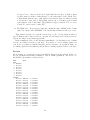
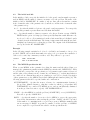
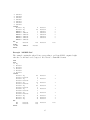
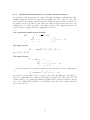
4. The BLOCKS card — It contains the word “BLOC” and a qualifier for the distribution
in the format (A4, 10X, A8), which means input the word “BLOC”, leave 10 digits
blank, and then use 8 digits for the distribution qualifier. Since we currently only
provide for discrete distributions the only valid qualifier is the word “DISCRETE”.
Instead of “BLOC” you can also specify “BLOCKS”, but only the first 4 characters
will be processed. The blocks card initializes a whole section used to specify all dependent random parameters of the problem. DECIS considers additive dependency.
Dependent random parameters are represented as additive functions of one or several
independent random parameters. The independent random parameters are called
blocks. For each possible realization of a block, the coefficients for each of the dependent random parameters are specified. You can view these coefficients as the product
of the outcome of the independent random parameter times the factor corresponding
to the dependent random parameter.
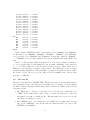
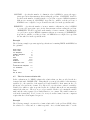
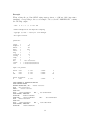
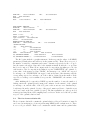
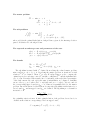
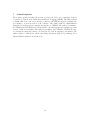
5. The BL card — Initializes a possible realization of a block of random parameters. It
has the format (1X, A2, 1X, A8, 2X, A8, 2X, E12), which means leave the first digit
blank, use 2 digits to input the block identifier “BL”, leave one digit blank, use up
to 8 digits to input the block name, leave 2 digits blank, use up to 8 digits to specify
the stage identifier, leave 2 digits blank and then use up to 12 digits for the decimal
representation of the probability corresponding to the realization of the block. The
stage identifier is for your information only, it is not further processed.
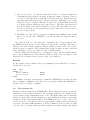
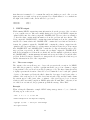
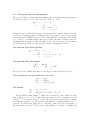
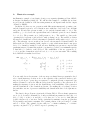
6. The BL section — It is used to specify all random parameters realizations of the
block named in the “BL” card. Use one record for each dependent random parameter
realization and input the different dependent random parameters one after the other.
Like in the independent section, the random parameters are identified by 2 identifiers.
If the random parameter is a B matrix or a D matrix (including the objective function)
coefficient the first identifier is the column name and the second identifier is the row
name of that random coefficient. If the random parameter is a right-hand side value
the first identifier is the right-hand side name in the core file (e.g., the string “RHS”)
and the second identifier is the row name of that right-hand side coefficient. If the
uncertain parameter is a bound value (lower, upper or fixed bound) the first identifier
is the string “BND” and the second identifier is the column name of that bound
coefficient. For specifying bounds we also need the keywords “LO” (for lower bound),
“UP” (for upper bound), or “FX” (for fixed bound), which are in colums 3 and 4 of
the record. The format for specifying a possible realization is (1X, A2, 1X, A8, 2X,
A8, 2X, E12, 2X, A8, 2X, E12), which means leave the first digit blank, use two digits
for the keyword (bounds only), leave one digit blank, then use up to 8 digits to enter
the first identifier, leave 2 digits blank, then use up to eight digits to specify the second
identifier, leave 2 digits blank, use up to 12 digits for the decimal representation of
the value of the realization.
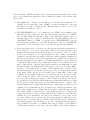
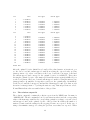
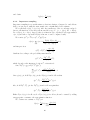
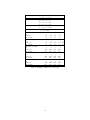
After having inputted all dependent realizations associated with a certain outcome of
the block, initialize a new realization of the block with corresponding probability using
a new “BL” card. To specify a new realization of the same block, keep the same block
18