1
2.1. Main solution
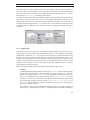
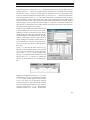
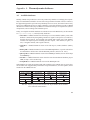
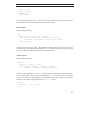
total-concentration of Ca2+ = 1 mmolal
actually means
concentration of Ca2+ + concentration of CaOH+ +
concentration of calcite + . . .= 1 mmolal
Then, the model calculates the actual concentrations (and activities) of each individual species.
– aqueous-concentration
corresponding to the sum the concentrations of all aqueous species containing the
principal element of the selected species. Picking up the example used for the total
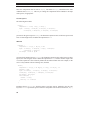
concentration of element Ca, the aqueous-concentration would be defined as follows :
concentration of Ca2+ + concentration of CaOH+ + . . .= 1 mmolal
hence without calcite —which is not an aqueous species indeed.
– concentration
corresponding to the actual concentration of the species, e.g. the concentration of
species Ca2+ , or of species CaOH+ . Consequently, the model will calculate the totalconcentration of the principal element of the species.
– activity
rarely used in speciation mode, this qualifier fixes the activity of the species and calculates the actual concentration and corresponding total concentration. The activity
of a species is the product of the concentration and an activity coefficient, the latter
calculated with the specified activity correction model.
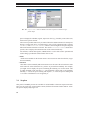
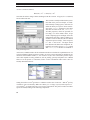
The minerals context proposes only two qualifiers :
– mineral
indicating that the species is a mineral. This qualifier is basically identical to the
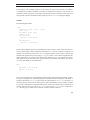
total-concentration : it does not fix the actual concentration of the mineral, but
the (total) concentration of all species composing the mineral. Note that adding 1
molal of a mineral does not necessarily give you 1 molal of the specific mineral in
solution ! Think about a spoon of sugar in your coffee. Part of the sugar will readily
dissolve, leading to less than a spoon on the bottom of your cup. If you absolutely
want to have 1 molal of mineral, you should use specifier concentration instead.
– concentration
corresponding to the actual concentration of the mineral species, adjusting the total
concentrations of the composing species, if necessary.
Similarly, the colloids and organics contexts propose two qualifiers, colloid and
concentration or organic and concentration respectively. These qualifiers behave
exactly like for the mineral species. And finally, the gases context proposes two qualifiers :
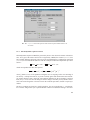
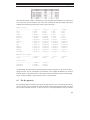
– fugacity
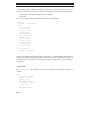
fixes the fugacity of the gas on the atmosphere basis. For example, the fugacity of
CO2 (g) in the atmosphere is ∼3.16×10⁻⁴. Fugacity is dimensionless.
11