1
If a Solbian panel must be installed over a crossbar, and if there is any bend in the canvas surface over the
bar, then a stiffening backing should be used under the panel. Typically a lightweight twin-wall
polycarbonate may be used; however you should contact your distributor for information on backing
material.
Zippers or Velcro may used to attach the panels, with the Velcro option recently becoming more popular.
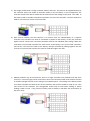
Here is an example of a Velcro installation:
Note that the Velcro is both sewn and glued to the panel. Also note that in this case a bit more clearance
could have been left between the Velcro and the cells to avoid shading the cells.
Regarding sewing, do NOT sew into the cells, stay 8-10mm (.4”) away from them. Stitching should have
wide spacing. If holes are too close together, it can weaken the edge of the panel.
INSTALLATION USING DOUBLE-SIDED ADHESIVE, GLUE OR DUAL-LOCK TAPE
Before installation, the surface onto which the modules are to be installed must be perfectly clean and dry.
The installation of SolbianFlex modules using peel and stick adhesive supplied by the manufacturer must be
carried out carefully and with precision, as this permanent method does not allow repositioning. The
surface on which the modules are installed does not necessarily need to be regular, but if it is not, the
modules cannot be walked on. Similar results can be obtained with silicon or polyurethane glue. In this case,
Solbian is not responsible for the results, but may be consulted about the adhesive to use.
When using commercial glue, be careful not to create an irregular surface, if the modules are to be walked
upon. The glue should be applied uniformly with a thickness not exceeding 2mm.
Before proceeding with a permanent installation using glue or double-sided tape, we recommend that you
check the performance of the module by measuring Voc and Isc and comparing with the datasheet.