1
Hunter 41 • Boating Safety
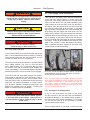
• As always, you can contact the Red Cross to obtain
information for training in CPR or emergency response
care.
before starting the engines or generator.
Next, start each engine and generator one at a time.
Follow the full run of the exhaust system, listening and
looking for leaks. While doing this, make sure there is
adequate ventilation and that your CO detector is on.
4.2.7 How to Minimize the Accumulation of Carbon
Monoxide
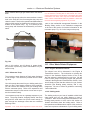
Practice good inspection and maintenance habits. Be
certain hull exhaust outlets are not blocked or restricted
in any way.
Other items to inspect are as follows: If your boat has
access panels, check that the access panels around
the engine and exhaust are in place and fit snugly to
minimize the opportunity for CO to enter the cabin. There
should be no large openings where CO could enter the
cabin. Ensure that all ventilation systems are in good
working order and are not blocked or punctured. Check
all sink drains to assure that they have a good water trap
to prevent CO from coming in from the outside.
Be alert for exhaust gasses from other boats. Always
provide adequate ventilation when weather enclosures
are in place and engines or generator is running.
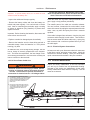
Do not run with a high bow angle. Use trim tabs or redistribute the load to maintain a low bow angle. Orient your
boat to maximize the dispersion of CO.
Finally, because poorly running engines produce excessive CO, make sure engines and generators are tuned
up. They should run smoothly and not produce black
smoke. The spark plugs (gas engines) and ignition systems should be maintained regularly, and the fuel system
and air filters should be in good order.
We cannot identify or describe every possible variable or
combination of variables, you must continually observe
passengers for symptoms or Carbon Monoxide intoxication and be aware of the many possibilities of Carbon
Monoxide accumulation. For instance, poorly maintained
hoses and hose connections on the generator or engine
exhaust system(s) can permit Carbon Monoxide to escape
into the interior of your boat. Therefore, the exhaust system must be periodically examined and maintained in
order to ensure its integrity. Moreover, all accommodation
spaces constantly require proper ventilation.
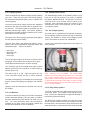
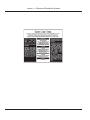
4.2.9 Carbon Monoxide Detectors
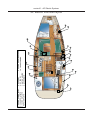
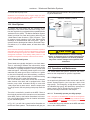
If you carefully avoid potential CO accumulation and
maintain your systems properly, you have made great
strides towards protecting yourself and others from the
dangers of Carbon Monoxide. We have assisted you in
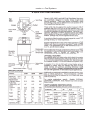
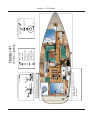
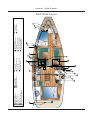
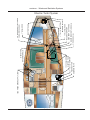
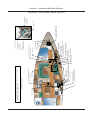
your endeavor by providing CO detectors in each living
area aboard your boat. We use only those CO detectors
that are UL approved for marine use. RV and residential models won’t withstand the elements of the boating
environment. Most CO detectors require specific maintenance procedures to remain accurate and functional.
Follow the manufacturer’s instructions for the use and
maintenance of the CO detectors.
4.2.8 Preventative Maintenance
Frequent inspections and proper maintenance of the
engine, and exhaust system, as well as, other various
areas of your boat are critical in preventing the accumulation of Carbon Monoxide. It is the owner’s responsibility
to make sure the entire boat is inspected and maintained
against CO.
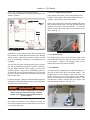
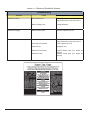
it's strong recommended that you change CO and Smoke
alarm batteries when changing the clocks for DaylightSaving Time. Replace Smoke Alarms every 10 years
and replace Carbon Monoxide (CO) alarm every 5
years since the sensors in these devices can degrade
because of environmental contamination and from age.
In addition to replacing batteries in smoke alarms at least
once every year. Always make sure the followings:
1. Smoke/CO alarms should be tested monthly to make
sure they are working in your boat.
2. Batteries should be changed once a year, when
changing the time on clocks of your boat.
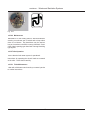
The exhaust systems of your engines and generator are
under constant attack from salt water, gasses, vibration, and normal wear. Inspect every exhaust system
component often. Start with a visual inspection. Check
each joint for discoloration, carbon buildup, stains, water
leaks, or other signs of damage. Inspect all metal parts
for corrosion, discoloration, or flaking. Check that all
hose clamps are in good condition and properly tightened. Carefully inspect all exhaust and cooling hoses for
signs of wear, dry rot, cracking, discoloration, chafing, or
swelling. If any of these conditions exist, have the entire
system inspected and corrected by a qualified technician
4.6