1
72
19.3 pH
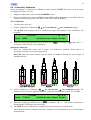
pH electrodes are generally combination electrodes, where the pH sensing membrane and the
reference system are contained in a single body. The sensing membrane is the round or spear
shaped bulb at the tip of the electrode. This produces a voltage that changes with the pH of the
Solution. This voltage is measured with respect to the reference section. The reference section
makes contact with the sample solution using a salt bridge, which is referred to as the reference
junction. A saturated solution of KCl is used to make contact with the sample. It is vital that the
KCl solution has an adequate flow rate in order to obtain stable, accurate pH measurements.
19.3.1 Asymmetry of a pH or Specific Electrode
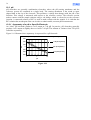
An “ideal” pH electrode produces 0 mV output at 7.00 pH. In practice, pH electrodes generally
produce 0 mV output at slightly above or below 7.00 pH. The amount of variance from 7.00 pH is
called the asymmetry.
Figure 19-1 illustrates how asymmetry is expressed for a pH electrode.
Response of pH Electrode, as a Function of Asymmetry
600
400
+1.00 pH Asymmetry
mV
200
0.00 pH Asymmetry
0
-200
-1.00 pH Asymmetry
-400
-600
0
7
14
pH
Figure 19-1