1
3
5,331,554
4
A contribution ?ag is set to true if any of the match
elements is greater than zero and, at the same time,
greater than or equal to the parent element correspond
} ing to that match element. If the contribution ?ag has
been set to true, then: (1) the merge elements are aver
aged to produce a merge vector average; and (2) if the
merge vector average equals or exceeds a predeter
or score representing how con?dent the system is that
the information on the retrieved page is responsive to
the query. Although the invention is described in terms
mined threshold value, then the location identi?ers
associated with the node are stored for display. Note
that the terms “enhanced comparison value” and
Implementation of the invention will be explained
below with reference to the ?gures and the program
code included in the Appendix. The pattern matching
of the invention may be undertaken using Common
LISP running on, for example, a DECstation 5000
workstation.
“lower bound” were used above when referring to the
invention in its broadest sense. In this particular em
bodiment, the merge vector average serves as the en
of its implementation as an aid to a user of a manual,
many of the most important features of the invention
have general application and are not intended to be
limited to text in a manual format.
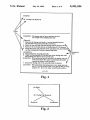
FIGS. 1 and 2 demonstrate how text from a manual
hanced companion value and the threshold value as the
lower bound.
15 may be formatted into a teen structure. FIG. 1 repre
sents a page from a copier manual. Using a public do
Whether the contribution ?ag has been set to true or
main product such as MChart, information from the
not, the invention repeats the process of producing the
page may be parsed into a Common LISP data struc
match vector, merging the match vector with the par
ture, and ?tted into a tree structure by topic, as repre
ent vector, determining whether to set the contribution
?ag, and, if the contribution ?ag is set to true, averaging 20 sented in FIG. 2.
Referring to the ?gures, although “Fusing” and
the merge elements and storing the relevant location
“Fusing Unit Removal” typically would be listed as
identi?ers, wherein all of these steps are performed at
each node after substituting for the parent vector the
topics in the table of contents, “Removal” and “Installa
merge vector that resulted from performing the merg
tion” would not be listed. Thus, the resulting text data
ing step on the parent node of the node under examina 25 structure as shown in FIG. 2 contains more information
tion. After these steps have been performed at each
than the table of contents, yet avoids extraneous infor
mation contained in the full text. As a result, a search of
node in the data structure, then the stored location
identi?ers are displayed on the video monitor.
the tree structure is faster and more ef?cient than a full
The foregoing summary demonstrates that through
text database search, and more accurate and compre
the merging process, the invention takes advantage of 30 hensive than a search of the table of contents.
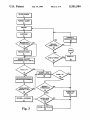
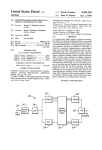
FIG. 3 is a flow chart illustrating the operation of a
the contextual propagation of comparison properties to
a node from its ancestors in the tree structure. Instead of
preferred embodiment of the present invention. To
begin, a query is entered through an input device, such
just comparing the match value to the threshold, the
invention compares a new value representative of the
as a keyboard, regarding the information that is con
degree of similarity not only of the present node to the
query, but also of the degree of similarity between the
tained in the text and that is correspondingly repre
sented in the text tree structure, Step 1. As indicated in
Step 2, the query is then parsed into a LISP data struc
ancestors of the present node and the query. Thus, a
node which might otherwise not pass the threshold
ture by a program such as MChart.
Referring to the Appendix, from this point on, the
would be counted as containing relevant information
because it has inherited comparison traits from its ances 40 implementation of FIG. 3 may be represented by the
main LISP routine search-parsed-tree, which compares
tors.
BRIEF DESCRIPTION OF THE DRAWINGS
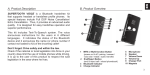
FIG. 1 is a page from a photocopier manual.
the query to text branch nodes in the tree structure
representing sections of a manual. The comparison
within each section is performed by the routine new
FIG. 2 is a tree structure representing information
search-branch, which is called by search-parsed-tree. In
from the page of FIG. 1.
'
new search branch, the parsed query data structure is
FIG. 3 is a flow chart illustrating the operation of the
represented by pattern, and the tree text structure by
branch.
present invention.
Moving to Step 3, after parsing, the query data struc
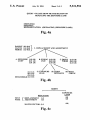
FIG. 4a illustrates a simpli?ed semantic representa
50 ture pattern is compared to a node (represented by
tion of a query.
FIG. 4b illustrates the process of the present inven
parsed-data) of the text structure branch, starting at the
highest level in the tree. This comparison results in the
tion applied to the formatted text of a manual.
FIG. 4c illustrates the formation of the match vector.
production of a match vector match-result. The match
FIG. 5a is a simpli?ed Step diagram of the apparatus
vector contains numerical elements representing the
55 degree of similarity between the node and the query.
of the present invention.
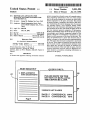
FIG. 5b is an example of the display screen represent
ing operation of the present invention using the query
The position of each element of the match vector corre
sponds to the position of a query constituent in the
and text data structure of FIGS. 40 and 4b.
query data structure.
DETAILED DESCRIPTION OF THE
INVENTION
The present invention is a method and apparatus
The comparison process is carried out by the function
match-content, which in turn calls the routine compare
two-language-structures.
Within
compare-two-lan
guage-structures, each query constituent is compared to
utilizing automated semantic pattern recognition
each node constituent at the current node, resulting in a
whereby a user of an instruction manual enters a query
matrix of “constituent values,” each such value being
regarding information in the text of the manual and the 65 representative of the degree of similarity between a
query constituent and a node constituent. The compari
invention displays the page numbers in which informa
tion responsive to the query is located. The pattern
son, uses a knowledge base, a technique known in the
prior art, to semantically broaden the search by includ
matcher also calculates and displays a con?dence level