1
can be monitored. The application of WSN in hospitals might help them as well to
organize and centralize the data of the patients and their medical test results.
o Agriculture: keeping track of parameters such as moisture, temperature, sunshine or
air pollutants [1].
o Environmental sensing: a WSN may be deployed in any area of interest to gather
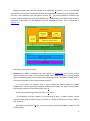
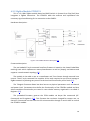
information about certain environmental condition. Seismic and volcanic activity [4]
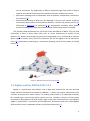
(illustrated in Figure3.1), air pollution [5, 6], temperature, humidity, water quality
are found among many other parameters that be measured by means of a WSN.
The already stated applications are just a few of the possibilities of WSNs. They can find
themselves a place in many other areas such as: mines (monitoring air quality of the
galleries) [5], dumps (monitoring the pressure of the garbage so it is removed by a machine
when it gets to certain point), forest fire detection (so the fire-fighters can be warned on
time) [7], greenhouses monitoring or warehouses (keeping track of the amount of stored
items) [1].
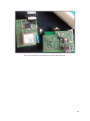
Figure 3.1: WSN monitoring an active volcano [32]
3.2 ZigBee and the IEEE Std 802.15.4
ZigBee is a specification that defines a set of high level protocols for low cost and low
power Wireless Personal Area Networks (WPANs). It does not require infrastructure (no
need for access point) or when it does, it is usually pretty simple. It is employed principally
for monitoring or control tasks which require low cost, reliability, security and low power
consumption (long battery life) where high range or high rate communication is not needed.
ZigBee is specified by a consortium of manufacturers, distributors and users called ZigBee
Alliance which is also a trademark property of Philips Corporation [1].
5