1
EFCOP Programming
D.3.3
Adaptive FIR Filter
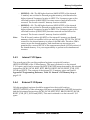
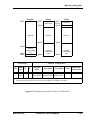
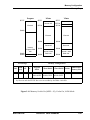
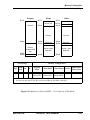
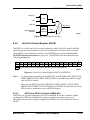
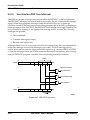
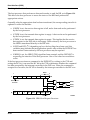
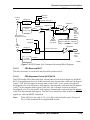
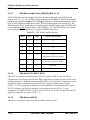
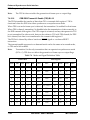
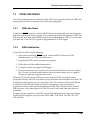
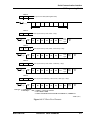
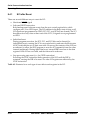
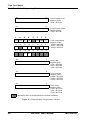
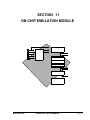
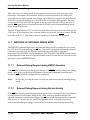
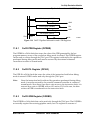
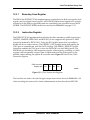
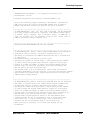
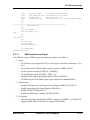
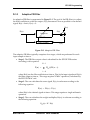
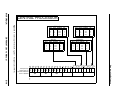
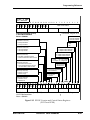
An adaptive FIR filter is represented in Figure D-3. The goal of the FIR filter is to adjust
the filter coefficients so that the output, F(n), becomes as close as possible to the desired
signal, R(n)—that is, E(n) -> 0.
R(n)
D(n)
F(n)
Adaptive
FIR Filter
Filter Update
E(n)
Figure D-3 Adaptive FIR Filter
The adaptive FIR filter typically comprises four stages, which are performed for each
input sample at time n:
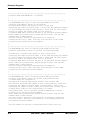
• Stage 1. The FIR filter output value is calculated for the EFCOP FIR session
according to this equation:
N–1
F(n ) =
∑ Hn ( i )D ( n – i )
i=0
where Hn(i) are the filter coefficients at time n, D(n) is the input signal and F(n) is
the filter output at time n,. This stage requires N MAC operations, calculated by
the EFCOP FMAC unit.
• Stage 2. The core calculates the error signal, E(n), in software according to the
following equation:
E(n) = R(n) – F(n )
where R(n) is the desired signal at time n. This stage requires a single arithmetic
operation.
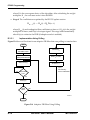
• Stage 3. The core calculates the weight multiplier, Ke(n), in software according to
the following equation:
Ke(n) = K * E(n)
MOTOROLA
DSP56307 User’s Manual
D-15