1
smaller bag (or the parts are removed part by part).
It is then up to the supervisor to manually check each bag before shipment to assure it has the
correct number of parts. If there is a mis-quantity, the supervisor must fix the problem by either
adding or removing parts. Although the customer receiving the parts only requires Tri-State to
perform a check for every 1-in-13 bags, the supervisors at Tri-State feel that that leaves too much
error. While the Tri-State employees are capable of greater accuracy, it greatly depends on their
mood each day. Therefore, there is little to no consistency, leaving such a mechanical check (of
1-in-13 bags) ineffectual.
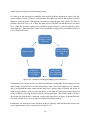
Fill Jigs: Occupy all Pegs or Holes with Parts
Flip Jig: Deposit Parts into Large Bag
Send to Vendor
Supervisor Checks Quantity in all Bags
Dump Parts from Large Bag into Smaller Bag
Figure 4.1.3 – Small parts counting and bagging process flow chart Unfortunately, the current process is tedious and difficult or impossible for the employees with
limited range of motion or low mental functionality. Only a few of the employees are currently
able to accomplish the larger orders because they have a greater range of motion and ability to
count to larger numbers. Process errors and delays occur when the employees become distracted
or have difficulty removing the parts from the current equipment. These failure modes call for a
device that can keep the user’s attention, requires little input force or degree of motion from the
user, and is simple to use for even the lower mental functioning workers.
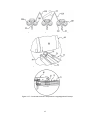
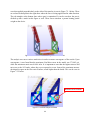
Furthermore, the work area used to fill these orders is relatively small and therefore restricts the
size of apparatus that can be considered (see Figure 4.1.4).
13