1
This document is a research report submitted to the U.S. Department of Justice. This report has not
been published by the Department. Opinions or points of view expressed are those of the author(s)
and do not necessarily reflect the official position or policies of the U.S. Department of Justice.
used in each amplification reaction (full-volume ID Plus reaction as per
manufacturer recommendation). All amplifications were injected on the AB 3500
instrument. GeneMapper ID-X software was used to analyze the samples with
an analysis threshold of 150 RFU, as was determined from the background study
(conducted prior to this study). Though the original plate setup on the 3500
contained 4, 8 and 15 second injections of the sensitivity study samples, only the
standard, 8 second injections will be analyzed in this study. Samples with high
heterozygosity were intentionally chosen to obtain a larger net for the detection of
dropout (the four samples chosen are completely heterozygous at the ‘core 13’
loci, though known data did not exist for amelogenin, D2 and D19).
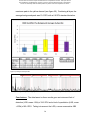
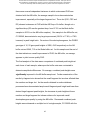
Sensitivity Results: Samples amplified with an original concentration of
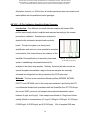
0.2ng/ul demonstrated an increased frequency of pullup peaks, baseline artifact peaks, elevated peak
heights (some off-scale data observed in smaller loci
and amelogenin) and shouldering in some of the
smaller loci (see figure 14). Samples in the 0.1ng/ul
group had some pull-up and artifact peaks (no off-
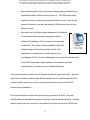
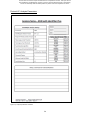
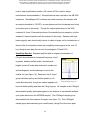
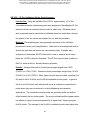
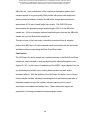
Figure 15. First dropout observed
in study (0.025ng/ul sample set)
scale data observed), though as a whole appeared to
be much better quality data than the 0.2ng/ul group. All samples in the 0.05ng/ul
demonstrated quality electropherograms in the absence of reproducible artifacts
(one spike observed in the 00F0069 sample). The 0.025ng/ul sample group
demonstrated the first instance of dropout (see figure 15). This 0.025ng/ul
sample group demonstrated good overall quality, though the intra-locus peak
74