1
16 SUPERMAX OWNER’S MANUAL
SELECTING DRUM ABRASIVES
It is important to select the proper grit of abrasives
for the type of sanding being performed to achieve
maximum sanding results. As with any sanding
operation, first begin sanding with a coarser grit,
depending on the roughness of the stock or the
amount of stock to be removed. Then progressively work toward finer grits. The chart below shows
the general uses for the various grits. Performax
Products offers abrasives in the ten different grits
shown.
Selecting Abrasive Grits. The amount of stock to
be removed is a major consideration when choosing the grit grade to start with. Grits 24, 36, 50,
and 60 are primarily designed for stock removal.
Grits 24 and 36 will remove the most material in
one pass, whether you are doing abrasive planing,
cleaning up glued panels, or flattening stock. Grits
from 100 through 220 are primarily finishing grits
designed to remove the scratch pattern from the
previous grit used. For best results, never skip
more than one grit grade when progressing
through a sanding sequence.
For fine work, such as furniture, try not to skip
any grit grades during the sanding process. In general, premium quality abrasives such as Genuine
Performax abrasives will produce a better finish
with a less noticeable scratch pattern. Caution:
Grits that are too fine can sometimes burnish the
wood and leave a glossy surface which will not
accept stains evenly. This will vary by type of
wood. Oak, for example, is susceptible to burnishing because of its open pores.
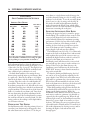
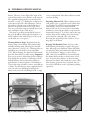
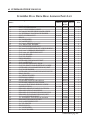
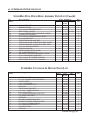
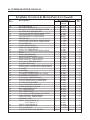
Selecting Grit Combinations. The chart shown
on page 14 is a general guide to consult when
selecting grits to use on dual drum machines and
setting the rear drum. This chart is also provided
under the dust cover on the SUPERMAX for quick
reference. The first column suggests grits for the
primary (front) drum of dual drum models, while
the second column suggests a corresponding grit
to use on the second (rear) drum. The third column suggests depth settings to try on the rear
drum, depending on the grit used. The setting values are based on a “0” reading when the drum
contacts the work piece but still can be rotated by
hand.
Note that the grits and settings are starting suggestions only. Other combinations and settings are
possible, depending on your particular circumstances. It is a good idea to keep records of the
combinations you use and their results. Keeping
these records handy will help you select the best
combinations of grits for future work.
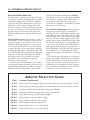
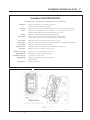
ABRASIVE SELECTION GUIDE
GRIT
24 Grit
36 Grit
50 Grit
60 Grit
80 Grit
100 Grit
120 Grit
150 Grit
180 Grit
220 Grit
COMMON APPLICATION
Abrasive planing, surfacing rough-sawn boards, maximum stock removal, glue removal.
Abrasive planing, surfacing rough-sawn boards, maximum stock removal, glue removal.
Surfacing and dimensioning boards, trueing warped boards.
Surfacing and dimensioning boards, trueing warped boards.
Light dimensioning, removal of planer ripples.
Light surfacing, removal of planer ripples.
Light surfacing, minimal stock removal.
Finish sanding, minimal stock removal.
Finish sanding only, not for stock removal.
Finish sanding only, not for stock removal.