1
CAUTION
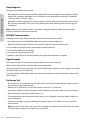
Damage to the paint coating may allow rust to the ADE which could result in failure of the ADE.
This in turn could cause disruption in operation of the Iridium Pilot device or danger from a falling
unit. Avoid damaging the paint coating. If damage occurs, re-apply appropriate anti-corrosion
paint. Failure to do so could result in serious injury or death.
WARNING
To avoid interfering with blasting operations, turn your device OFF when in a “blasting area” or
in areas posted: “Turn off two-way radio.” Obey all signs and instructions. Failure to do so could
result in serious injury or death.
1: INTRODUCTION
1.5.4 Blasting Areas
1.6 Overview of System Operation
1.6.1 Iridium Satellite Communications
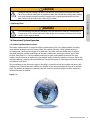
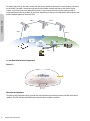
The Iridium satellite network is comprised of 66 low-earth orbiting (LEO), cross-linked satellites, providing
voice and data coverage over Earth’s entire surface. The satellites operate as a fully meshed network in
six orbital planes, positioned at a height of 781 kilometers (485 miles) with one satellite every 32 degrees
of latitude, with each satellite completing one orbit every 100 minutes, traveling at a rate of 16,832 miles
per hour. Each plane has 11 mission satellites performing as nodes in the telephony network. The spare
satellites are on orbit ready to replace any unserviceable satellite. Iridium has gateways in Arizona, Alaska and
additional telemetry, tracking and control facilities in Canada and Norway. It is the largest commercial satellite
constellation in the world.
This constellation ensures that every region on the globe is covered by at least one satellite at all times. Each
satellite is cross-linked to four other satellites; two satellites in the same orbital plane and two in an adjacent
plane. The satellite constellation is expected to provide continuous global coverage until 2018 without any
additional launches of satellites.
Figure 1.2
Iridium Pilot User Manual
5