1
5.4
Cyclic dependencies
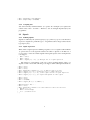
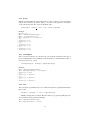
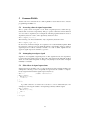
When a signal s is defined, a dependency is establishes with each of the signals or vars
that appear in the signal expression of s. Cyclic dependencies produce a runtime error
and must be avoided. For example the following code:
1
2
3
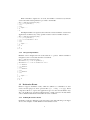
val a = Var(0)
/∗ WRONG − DON’T DO IT ∗/
val s = Signal{ a() + t() }
val t = Signal{ a() + s() + 1 }
creates a mutual dependency between s and t. Similarly, indirect cyclic dependencies must be avoided.
5.5
Objects and mutability
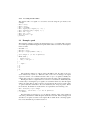
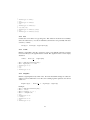
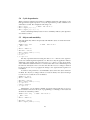
Vars and signals may behave unexpectedly with mutable objects. Consider the following example.
1
2
3
4
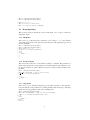
/∗ WRONG − DON’T DO IT ∗/
class Foo(init: Int){
var x = init
}
val foo = new Foo(1)
5
6
7
8
9
10
val varFoo = Var(foo)
val s = Signal{ varFoo().x + 10 }
// s.get == 11
foo.x = 2
// s.get == 11
One may expect that after increasing the value of foo.x in Line 9, the signal expression is evaluated again and updated to 12. The reason why the application behaves
differently is that signals and vars hold references to objects, not the objects themselves. When the statement in Line 9 is executed, the value of the x field changes, but
the reference hold by the varFoo var is the same. For this reason, no change is detected
by the var, the var does not propagate the change to the signal, and the signal is not
reevaluated.
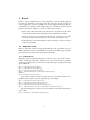
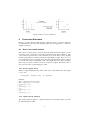
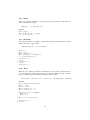
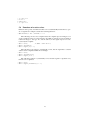
A solution to this problem is to use immutable objects. Since the objects cannot be
modified, the only way to change a filed is to create an entirely new object and assign
it to the var. As a result, the var is reevaluated.
1
2
class Foo(x: Int){}
val foo = new Foo(1)
3
4
5
6
7
8
val varFoo = Var(foo)
val s = Signal{ varFoo().x + 10 }
// s.get == 11
varFoo()= newFoo(2)
// s.get == 12
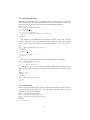
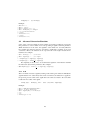
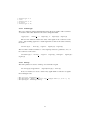
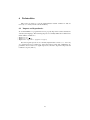
Alternatively, one can still use mutable objects but assign again the var to force
the reevaluation. However this style of programming is confusing for the reader and
should be avoided when possible.
1
2
3
4
class Foo(init: Int){
var x = init
}
val foo = new Foo(1)
/∗ WRONG − DON’T DO IT ∗/
5
6
7
val varFoo = Var(foo)
val s = Signal{ varFoo().x + 10 }
16