1
The original DLL
A tree memory encoding of the DLL
undefined pointers
null
Y
Descriptors
S = {1, 2}
−1
S = {1, 2}
D1 : 1. M1
null pointers
X null
7
X
14
26
M2
Z
Z
M1 M2 26
D2 : 1. M2
D1
7
D2
D1
M1 M2 14
Y
D2
D1
10
M1
10
D2
null
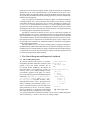
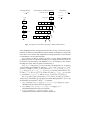
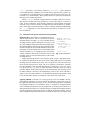
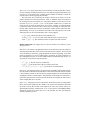
Fig. 3. An example of a tree memory encoding—a doubly linked list (DLL)
a basic building block of a routing expression describes one step over the tree memory
backbone: we follow a certain branch up or down and then we should see a certain node
(most often, we will use the node components of routing expressions to check whether
a certain marker is set in a particular node).
A tree memory encoding is a tuple (t, µ) where t is a tree memory backbone and
µ a mapping from the set of pointer descriptors R to routing expressions over the set
of selectors S and the memory node alphabet Σ2 of t. An example of a tree memory
encoding for a doubly-linked list (DLL) is shown in Fig. 3.
Let (t, µ), t = undef (null(t 0 )), be a tree memory encoding with a set of selectors
S and a memory node alphabet Σ2 . We call π = p1 s1 ...pl sl pl+1 ∈ Σ2 .((S ∪ S −1 ).Σ2 )l
a path in t of length l ≥ 1 iff p1 ∈ P os(t 0 ) and ∀i ∈ {1, ..., l} : (si ∈ S ∧ pi .si = pi+1 ∧
pi+1 ∈ P os(t 0 )) ∨ (si ∈ S −1 ∧ pi+1 .si = pi ). For p, p0 ∈ N lPos(t 0 ) and a selector s ∈ S ,
s
we write p −→ p0 iff (1) t 0 (p).s ∈ R , (2) there is a path p1 s1 ...pl sl pl+1 in t for some
l ≥ 0 such that p = p1 , pl+1 = p0 , and (3) s1t 0 (p2 )...t 0 (pl )sl t 0 (pl+1 ) ∈ µ(t 0 (p).s).
The set of shape graphs represented by a tree memory encoding (t, µ) with t =
undef (null(t 0 )) is denoted by [[(t, µ)]] and given as all the shape graphs SG = (N, S,V, D)
for which there is a bijection β : P os(t 0 ) → N such that:
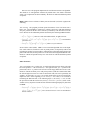
1. ∀p, p0 ∈ N lPos(t 0 ) ∀s ∈ S : (t 0 (p).s 6∈ {⊥, >} ∧ p −→ p0 ) ⇔ S(β(p), s) = β(p0 ).
(The links between memory nodes are respected.)
2. ∀p ∈ N lPos(t 0 ) ∀s ∈ S ∀x ∈ {⊥, >} : t 0 (p).s = x ⇔ S(β(p), s) = x.
(Null and undefined successors are respected.)
3. ∀v ∈ V ∀p ∈ P os(t 0 ) : v ∈ t 0 (p).var ⇔ V (v) = β(p).
(Assignment of memory nodes to variables is respected.)
s