1
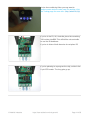
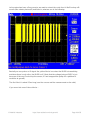
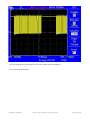
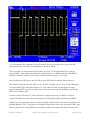
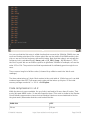
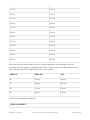
You can measure the frequency of the IR pulses. As you can tell by the cursors and the
measurements on the side, the frequency is about 37.04KHz
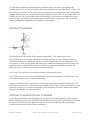
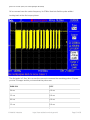
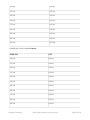
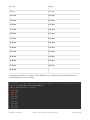
OK so now we can understand how IR codes are sent. The IR transmitter LED is quickly
pulsed (PWM - pulse width modulated) at a high frequency of 38KHz and then that PWM is
likewise pulsed on and off much slower, at times that are about 1-3 ms long.
Why not have the LED just on and off? Why have PWM 'carrier' pulsing? Many reasons!
One reason is that this lets the LED cool off. IR LEDs can take up to 1 Amp (1000 milliamps!)
of current. Most LEDs only take 20mA or so. This means IR LEDs are designed for highpower blasting BUT they can only take it for a few microseconds. By PWM'ing it, you let the
LED cool off half the time.
Another reason is that the TV will only listen to certain frequencies of PWM. So a Sony
remote at 37KHz won't be able to work with a JVC DVD player that only wants say 50KHz.
Finally, the most important reason is that by pulsing a carrier wave, you reduce the affects of
ambient lighting. The TV only looks for changes in light levels that clock in around 37KHz. Just
like it's easier for us to tell differences between audio tones than to pin down the precsise
© Adafruit Industries
https://learn.adafruit.com/tv-b-gone-kit
Page 50 of 65