1
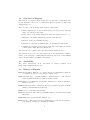
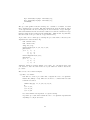
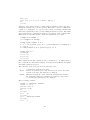
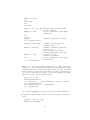
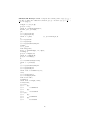
intmat A[3][3] = -1, -1, -1, 0, 0, 1, 0, 1, 0;
print(A);
//->
-1
-1
-1
//->
0
0
1
//->
0
1
0
Now define your own matrix ordering using A:
ring A9 = 0,(x,y,z),M(A); //a local ordering
poly f = imap(A1,f); f;
//-> xy2+x3+z4+x3yz+y5
3.6
Leading data
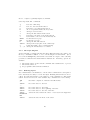
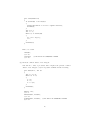
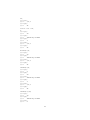
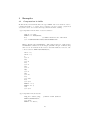
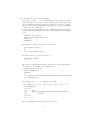
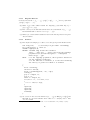
ring A = 0,(x,y,z),lp;
poly f = y4z3+2x2y2z2+3x5+4z4+5y2;
f;
//display
//-> 3x5+2x2y2z2+y4z3+5y2+4z4
leadmonom(f);
//leading
//-> x5
leadexp(f);
//leading
//-> 5,0,0
lead(f);
//leading
//-> 3x5
leadcoef(f);
//leading
//-> 3
f - lead(f);
//tail
//-> 2x2y2z2+y4z3+5y2+4z4
3.7
f in a lex-ordered way
monomial
exponent
term
coefficient
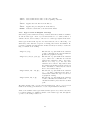
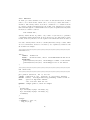
Normal form
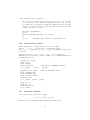
Note that NF(f | G) may depend on the sorting of the elements of G. The
function reduce computes a normal form.
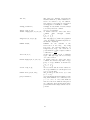
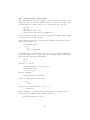
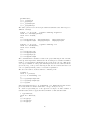
ring A = 0,(x,y,z),dp; //a global ordering
poly f = x2yz+xy2z+y2z+z3+xy;
poly f1 = xy+y2-1;
poly f2 = xy;
ideal G = f1,f2;
ideal S = std(G);
//a standard basis of <G>
S;
//-> S[1]=x
//-> S[2]=y2-1
reduce(f,G);
//** G is no standardbasis
//-> y2z+z3
//NF w.r.t. a non-standard
//basis
35