1
GLOSSARY OF TERMS
41
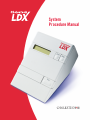
Cholestech LDX System Procedure Manual
Method – analytical method; the instructions including procedures, material, equipment,
and everything else needed for an analyst to perform an analysis.
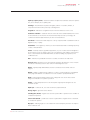
Normal Values (Expected Values, Reference Values) – range of values established for each
analyte, which includes the results expected when performing a test on a healthy person.
Out of Control – in a testing procedure when the results from a control sample are outside
the acceptable control range.
Pathogen – (adjective pathogenic) microorganism that causes a disease.
Phlebotomy – puncture of a vein to collect blood. A phlebotomist collects blood by
venipuncture (venous blood).
Photometry – measurement or analysis of light emitted by a substance. Reflectance
photometry is the principle used in most instruments that read dry reagent strips.
Pipette – glass or transparent plastic tube used to measure small quantities of liquid.
A volumetric pipette is an extremely accurate, single-line pipette used to reconstitute
calibrators and controls.
Plasma – liquid part of blood after it has been mixed with an anticoagulant and spun down
in a centrifuge.
Precision (reproducibility) – measure of the closeness of the results obtained when
analyzing the same sample more than once; the measure of agreement between replicate
measurements.
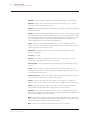
Procedure Manual – laboratory manual that contains the methods, materials, and other
information needed to do a test.
Product Insert – informational material that comes with instruments, reagents, and other
laboratory products giving instructions for the use of the product and other information
required of the manufacturer by the U.S. Food and Drug Administration.
Proficiency Samples – analytes of unknown concentration that are sent to laboratories
participating in proficiency testing programs.
Proficiency Testing – program in which samples are sent to a group of laboratories for
analysis. The results are tabulated by the program’s sponsor, and a participating laboratory
can compare its results with those of other laboratories that use the same method.
Protocol – standard set of procedures for performing a procedure, such as a test or
an evaluation.
Quality Assurance – comprehensive set of policies, procedures, and practices necessary to
make sure that the laboratory’s results are reliable. QA includes record keeping, calibration,
and maintenance of equipment, quality control, proficiency testing, and training.
Quality Control – set of laboratory procedures designed to ensure that the test method is
working properly and that the results meet the diagnostic needs of the physician. QC
includes testing control samples, charting the results, and analyzing them statistically.
<
TABLE OF CONTENTS