1
1.1 Introduction to Power Compensation Calorimetry (PCC)
Power compensation calorimetry provides a direct measurement of the power generated by a chemical reaction.
From that measurement, a chemist can access further calorimetry data such as the Enthalpy of Reaction.
The PCC method uses conjointly a circulator and a power supply to maintain the reaction temperature of the
system at a fixed value. The circulator is set to a running temperature for the whole length of the experiment (for
example 10°C less than the reaction temperature). The reaction temperature control is achieved by varying the
power dispensed to the reaction medium by the power supply via the heater rod.
As the process heat load changes, the electrical power is varied (in real time) in order to maintain the desired
process temperature. The heat generated by the reaction is simply obtained from the difference between the heater
power during the reaction and the baseline heater power. This can be integrated to give the enthalpy of reaction.
The power compensation calorimetry method is easy to set up and requires less running time than other
calorimetry methods. It is however limited by the baseline power provided by the Power Supply: if the power
generated by the reaction exceeds the baseline power maintained by the system, the system cannot compensate
for the reaction power anymore, the reaction temperature will increase and the system will not be isothermal
anymore.
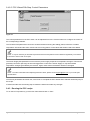
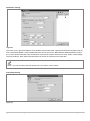
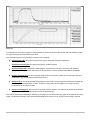
A PCC experiment is broken down into four phases (Figure 1 page 6).
•
“Warming”: The system is warmed/cooled as quickly as possible until close to the desired reaction
temperature using the circulator and the Power Supply.
•
“Settling”: The Power Supply provides a fixed amount of power while the circulator is controlling the jacket
temperature in order to achieve the target reaction temperature.
•
“Zeroing”: The system has now fixed the jacket temperature and the Power Supply controls the
temperature by varying the power supplied to the reaction mixture. The jacket temperature will remain fixed
for the rest of the PCC run.
•
“Running”: The reaction happens during this phase, triggered by the addition of a reagent (either in
manually or in an automated fashion). During the run, the system reports approximate reaction power and
enthalpy.
Figure 1
Syrris Ltd: Atlas Calorimetry Guide
Page 5 of 56