1
This latter feature can be illustrated using a simple example from geographic information systems.
An ADAM database was produced independently of the interface for storing low-level information
on roads, junctions and other boundaries for subsequent analysis [2]. A simple application of the
interface is to enable maps stored in the database to be drawn using the graphical interface. This
can be achieved by attaching a method called draw to each of the geographical objects which have
to be represented on the screen. For example, to draw the centre line of a road, it is only necessary
to retrieve its start and end points, create a new EDEN line object, and then to draw that line in an
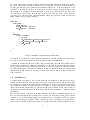
EDEN picture object, as shown in gure 4.
class road {
attributes {
name: string;
start_junction: junction;
end_junction : junction;
...
}
methods {
draw(p: picture) {
l = line();
l.put_start(start_junction.get_point());
l.put_end(end_junction.get_point());
p.draw_line(l);
}
...
}
}
Figure 4: Fragment of geographical database schema.
The drawing of the gures on the map can then be achieved by creating a picture and iterating over
all the objects which have to appear on the map, sending them the message draw.
A simple map-drawing program which draws streets, junctions and street names has been written in
under 50 lines of EDEN code. Because the lines and text on the map are represented as database
objects, the map can be stored in the database along with the objects from which it was constructed,
and then redrawn simply by sending the associated picture the message open, which is quicker than
drawing the map from scratch (in this case, it takes about 5 times as long to rebuild a display as it
does to reopen it).
4.2 Extensibility
A principal feature of ADAM is that its data model can be extended with new constructs such as
relationships and composite objects, as described in [9, 19]. This extensibility at the model level places
new demands on direct manipulation database interfaces, which must provide eective visualisations
for the dierent categories of object described by the model. In eect, an extensible data model
requires an extensible interface [20]. This section outlines how the EDEN system has been used to
implement an extensible browser and manipulation system for ADAM called EVE (Extensible Visual
Environment).
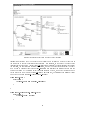
EVE is itself an ADAM object, which contains references to a number of EDEN objects which are
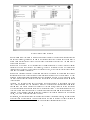
used to present information and to interact with the user. The initial EVE display, which is shown
in Figure 5, is a collection of windows, which are represented by three EDEN objects for scrolling
through lists of names, and an EDEN picture object which is used to display part of the schema as a
graph. Each of the schema components drawn in the schema graph are drawn using EDEN objects.
8