1
6-4
Celtec User Guide
Color in Foamed PVC
by David Harman, National Sales Manager, Vycomoration, Scranton, PA
and
Jim McCormick, Group Vice President, A-T-I, St. Louis, MO
Foamed polyvinyl chloride (PVC) has become one of the most popular materials for
a wide range of projects, whether the application involves exhibits and
displays, signage, screen printing, photo mounting or various OEM fabrications.
Yet, like other materials, foamed PVC has unique characteristics, and correct
information about the nature of the product will contribute to more successful
projects. Information about color in foamed PVC can be especially helpful in
deciding how to use this type of material to its best advantage.
Closed-cell, foamed PVC is moisture resistant, and manufacturers recommend it
for various time periods outdoors as well as for indoor use. The recommended
outdoor time periods are directly related to the degree of color fastness desired,
weathering requirements, and surface preparation, such as ultraviolet clearcoat.
Manufacturers have conducted tests of fade resistance for time periods ranging
from just three months’ exposure to 30 months. While test results vary, one
conclusion is obvious: the nature of PVC material in untreated or “natural” form
makes it susceptible to color fade due to UV exposure over time—regardless of
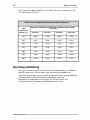
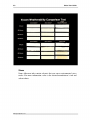
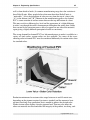
color or brand name. In one study, material samples in white, red and blue
produced by three different manufacturers were tested for 30 months (readings
taken with the Hunterlab color meter system using L, a, b, color coordinates).
Very significant changes were seen in almost all samples except white, with
changes of more than five “Delta E units” considered “dramatic.” Delta E
quantifies the change in the three-dimensional attributes of the Hunterlab color
system for a measurement of total color difference from initial time of exposure.
In fact, white material changes in a similar way, but because the primary change is
“chalking,” the change is not as noticeable.
There are several ways to reduce or eliminate the impact of color fading in foamed
PVC material. One is to use white material itself, in which the fading is less
noticeable. Other solutions include using a UV-resistant clear topcoat; using the
foamed PVC material as a substrate for a vinyl film, laminate or covering; and
painting the material with a weather-resistant paint, such as a two-part
polyurethane. Because foamed PVC in white is often 20% to 30% less expensive
than other colors, various surface treatments using white foamed PVC can be
affordable alternatives.
A second basic fact of foamed PVC boards is that color will vary somewhat from
manufacturer to manufacturer, from extrusion machine to extrusion machine, as
www.vycomplastics.com