1
1.13. CONFIGURABLE YAWL
67
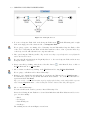
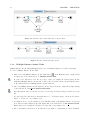
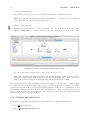
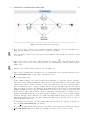
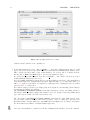
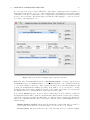
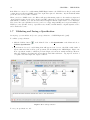
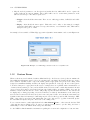
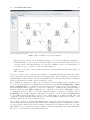
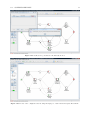
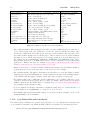
Figure 1.62: A C-YAWL model for travel requisition
•
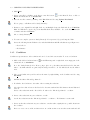
Input ports can be hidden or blocked. Hiding an input port corresponds to making the task silent, i.e.
the task will still be executed but its decomposition will be removed and thus the task won’t have any
observable behavior. Blocking an input port corresponds to inhibiting control to the task via that port,
i.e. it will no longer be possible to execute the task via that port.
•
Output ports can only be blocked. This means that the outgoing paths from that task via that port
will be disabled.
Moreover, you can block the cancelation region assigned to a task (this means that the task’s region will be
removed altogether), and restrict the parameters of a multiple instance task. Specifically, you can reduce the
maximum number of allowed instances, increase the minimal number of allowed instances and the continuation
threshold, and change the dynamic creation of instances to static.
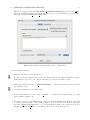
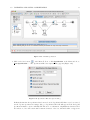
The configuration of input ports, output ports, cancelation regions and multiple instance parameters, can
be accessed by right-clicking on a configurable task, and then selecting Process Configuration > Input
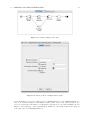
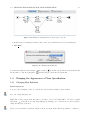
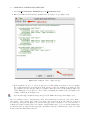
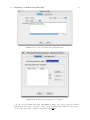
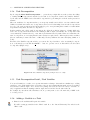
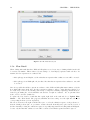
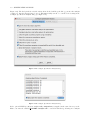
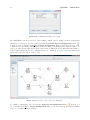
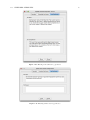
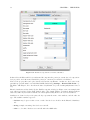
Ports..., Output Ports..., etc. Figure 1.63 shows the dialog window for the output ports configuration of
task “Submit Travel Form for Approval”. You can select a single port or multiple ports by using the Shift or
Ctrl keys, and then press the Hide or Block button to configure the selected ports, or Activate to rollback
a configuration. It is also possible to set default configuration values for each port, by pressing the button
Set Defaults. Once default configuration values have been assigned to a port, the button Use Default will
become available when selecting that port, and you can configure that port by using its default value. All
configuration settings (including default values) are stored in the YAWL specification upon saving, so this
information will be preserved after closing the model.
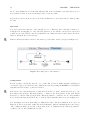
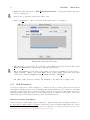
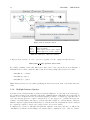
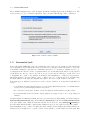
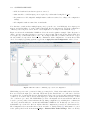
Let’s block the output port of task “Submit Travel Form for Approval” towards task “Request for change”,
and let’s make task “Check and Update Travel Form” silent, by hiding its input port. With the first operation
we deny requests for changes after a travel form has been submitted, by blocking the flow into the loop path,
while with the second operation we deny the possibility of checking and updating a travel form, although in
this case we don’t block the flow through the hidden task.