1
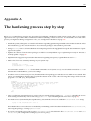
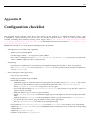
Chapter B. Configuration checklist
140
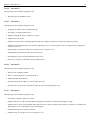
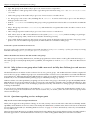
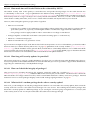
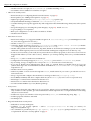
– Disable network root login; use su(1) or sudo(1). (consider installing sudo)
– Use PAM to enforce additional constraints on logins?
• Other local security issues
–
–
–
–
–
–
–
–
–
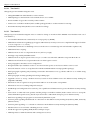
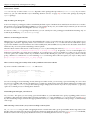
Kernel tweaks (see ‘Configuring kernel network features’ on page 56)
Kernel patches (see ‘Adding kernel patches’ on page 52)
Tighten up log file permissions (/var/log/{last,fail}log, Apache logs)
Verify that SETUID checking is enabled in /etc/checksecurity.conf
Consider making some log files append-only and configuration files immutable using chattr (ext2/3 file systems
only)
Set up file integrity (see ‘Checking file system integrity’ on page 56). Install debsums
Log everything to a local printer?
Burn your configuration on a boot-able CD and boot off that?
Disable kernel modules?
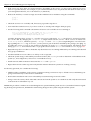
• Limit network access
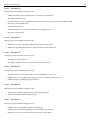
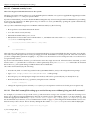
– Install and configure ssh (suggest PermitRootLogin No in /etc/ssh/sshd_config, PermitEmptyPasswords
No; note other suggestions in text also)
– Disable or remove in.telnetd, if installed
– Generally, disable gratuitous services in /etc/inetd.conf using update-inetd --disable (or disable
inetd altogether, or use a replacement such as xinetd or rlinetd)
– Disable other gratuitous network services; ftp, DNS, WWW etc should not be running if you do not need them
and monitor them regularly. In most cases mail should be running but configured for local delivery only.
– For those services which you do need, do not just use the most common programs, look for more secure versions
shipped with Debian (or from other sources). Whatever you end up running, make sure you understand the
risks.
– Set up chroot jails for outside users and daemons.
– Configure firewall and tcpwrappers (i.e. hosts_access(5)); note trick for /etc/hosts.deny in text.
– If you run ftp, set up your ftpd server to always run chroot’ed to the user’s home directory
– If you run X, disable xhost authentication and go with ssh instead; better yet, disable remote X if you can
(add -nolisten tcp to the X command line and turn off XDMCP in /etc/X11/xdm/xdm-config by setting the
requestPort to 0)
– Disable remote access to printers
– Tunnel any IMAP or POP sessions through SSL or ssh; install stunnel if you want to provide this service to
remote mail users
– Set up a log host and configure other machines to send logs to this host (/etc/syslog.conf)
– Secure BIND, Sendmail, and other complex daemons (run in a chroot jail; run as a non-root pseudo-user)
– Install tiger or a similar network intrusion detection tool.
– Install snort or a similar network intrusion detection tool.
– Do without NIS and RPC if you can (disable portmap).
• Policy issues
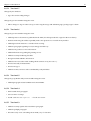
– Educate users about the whys and hows of your policies. When you have prohibited something which is regularly available on other systems, provide documentation which explains how to accomplish similar results using
other, more secure means.
– Prohibit use of protocols which use clear-text passwords (telnet, rsh and friends; ftp, imap, http, . . . ).
– Prohibit programs which use SVGAlib.
– Use disk quotas.
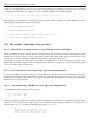
• Keep informed about security issues
– Subscribe to security mailing lists
– Configure apt for security updates – add to /etc/apt/sources.list an entry (or entries) for
http://security.debian.org/
– Also remember to periodically run apt-get update ; apt-get upgrade (perhaps install as a cron job?)
as explained in ‘Execute a security update’ on page 33.