1
3 | DAC Tutorial on Foraging
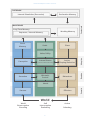
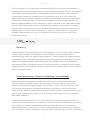
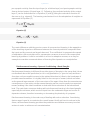
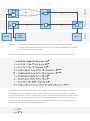
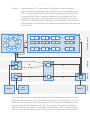
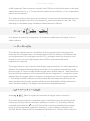
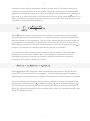
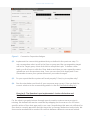
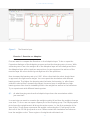
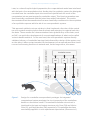
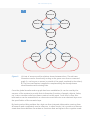
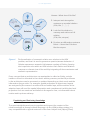
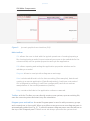
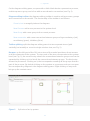
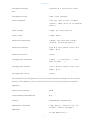
The module has four input groups (Fig. 3):
action: the current action executed by the robot that was triggered either by
the reactive layer or by the adaptive layer (the default going forward action is
not stored).
prototype: the current CS prototype generated by the adaptive module.
stats: the cells of this group inform the contextual layer about the
achievement of a positve or negative goal state. The first cell indicates that
a positive goal state has been reached whereas the second informs about
a negative goal state. After the activation of one of these two cells, the
information in the STM is copied in the LTM either as a positive or a negative
sequence and the STM is reset. In this tutorial, only positve sequences are
stored and the proximity sensors are only used to inform the contextual layer
that the robot failed to reach the target (a wall at the top of the environment
makes this information available) and then the STM is reset without copying
its content into the LTM.
discrepancy: it is an average measurement of the quality of the CS prototype's
generated by the adaptive layer.
And one output group (Fig. 3):
action: action proposed by the contextual layer computed from the actions
contained in the selected segments.
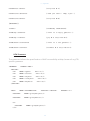
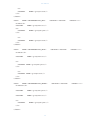
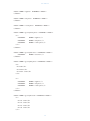
And five output groups (Fig. 3) that are basically used to display information
about the internal states of the contextual layer so that the user can have a better
understanding of how the information is being acquired and retrieved from memory.
All five groups have a size of NSxNL and show the information about each segment
in the LTM.
empty: it indicates if the specific segment in memory has been filled in (1 if
the segment is empty and 0 if it is not).
collector: collector activity of each segment.
distance: the distance between the prototype CS stored in the specific
segment in the LTM and the actual generated CS prototype.
selected: it indicates if the segment has been selected or not, satisfying both
that the activity of the collector is above the selection threshold and above
84