1
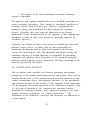
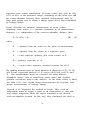
Since the anisotropy factor F(r, θ) is dependent on source design, users
of remote afterloading units should carefully review the literature
before adopting any specific set of values for calculation of dose
distributions.
5.
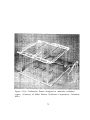
Calibrations in water or solid phantoms
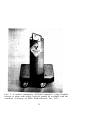
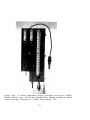
Calibrations in water or in solid phantoms of water equivalent material
allow potentially more reproducible measurements over time, relative
to “in-air” measurements, as positioning errors may be less in a welldesigned water or solid phantom than with “in-air” calibration devices.
Any phantom must be sufficiently large to provide full scatter in all
directions.
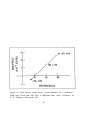
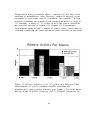
Meli et al.102 investigated the dosimetry characteristics of polystyrene,
solid water, and polymethylmethacrylate (PMMA) (e.g., lucite, perspex,
192
plexiglass, acrylic) using a Ir source. They concluded that
polystyrene and solid water are equivalent to water even if a full
scattering phantom is not used. However, the more dense PMMA
provided more attenuation of primary radiation, which is compensated
for by an increase in scatter under full scattering conditions; without a
full scatter medium, PMMA is not truly water equivalent.
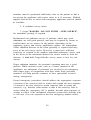
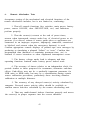
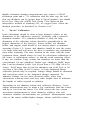
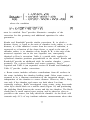
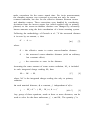
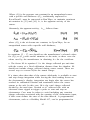
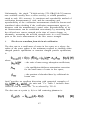
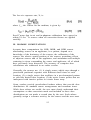
The free air exposure rate measured in a medium is given by [10] with
P RS equal to unity, i.e., no room scatter corrections are required.
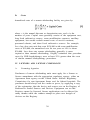
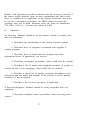
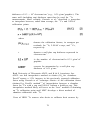
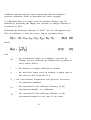
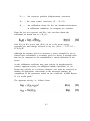
The dose rate at a point (r, θ) in the medium is:
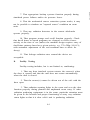
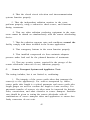
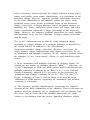
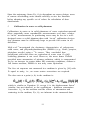
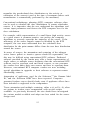
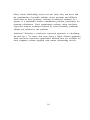
which is similar to Equation 19, except 4 is the displacement factor”
(similar, but not identical, to the equilibrium - thickness attenuation
correction Aeq) in the medium and the effects of attenuation and
scattering in the medium, F(r, θ), are inherent in the measured data.
91