1
4.3 Altitude Control
1
Raw data
ωc = 10
Altitude (m)
0.5
0
−0.5
−1
10
20
30
40
50
Time (s)
60
70
80
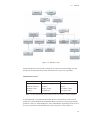
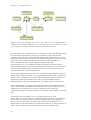
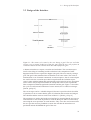
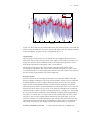
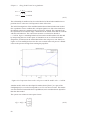
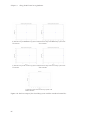
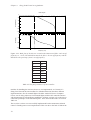
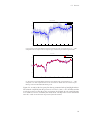
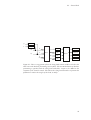
Figure 4.22: Raw and low pass filtered data from the pressure sensor, converted into
meters, when the quadrotor sits on the ground with motors off. The natural variations
in the atmospheric pressure can have a magnitude up to 1 m.
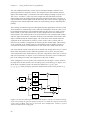
effect, turbulence and battery depletion causing the quadrotor to require a variable
thrust to hover continously.
Another solution that was discussed was to set the setpoint at 1 m above the ground
and after the quadrotor had stabilized around the setpoint, it would do a slow
descent according to the first intuitive solution. This was an interesting solution that
was implemented to some extent in Emergency Landing but was never tested due to
bad weather conditions during the final week of the thesis.
The problem with the atmospheric pressure variations was not such an issue for the
Lifting state since it could be implemented to do an aggressive step response to a
secure height, e.g. 2 m. The problem of this state was to determine when to switch to
flying and allow the user to affect the set point. It is not sufficient to just say that the
switch should be made when the quadrotor is close to the set point. If the quadrotor
overshoots the set point and a scared user gains access to the set point, he/she can
pull down the set point to ground level to ”stop” the quadrotor resulting in a crash.
A second condition has to be added and a good property to study would be the
velocity. If the quadrotor is close to the set point and has a low velocity, the
transition to Flying can be made. All that is needed then is the derivative of the
altitude and that has already been developed in the controller. Since the derivative
action of the PID controller calculates the derivative of the altitude, it can be used in
the second condition. As the PID controller is on parallel form, it is easy to access
the derivative action and no modifications are required.
The control itself is the same throughout the states in the state machine and no
parameter changes are made anywhere. However, the PID controller does support
bumpless parameter changes and it would be interesting to study if other parameters
would improve the performance at lift off and landing situations.
77