1
based computational model to predict the thermo-mechanical response
of the asphalt concrete using a coupled thermo-viscoelastic, thermoviscoplastic, and thermo-viscodamage constitutive model. [You et al.,
2008] studied the dynamic modulus from the stress-strain response under compressive loads for two-dimensional 2D and three-dimensional
3D microstructure-based discrete element models of asphalt mixtures.
[Masad et al., 2005] developed an approach for constitutive modeling of the viscoplastic behavior of asphalt mixes and measured the
microstructure damage with X-ray computed tomography and image
analysis techniques. However, very limited amount of work has been
done so far for 3D image-based modeling of AC while some studies
only considered the distribution of the aggregates and the mastic phase
[You et al., 2012]
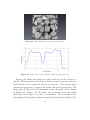
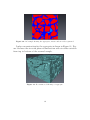
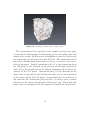
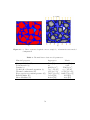
The air-voids, mastic and aggregates phase are considered in this
study. The interface between the mastic phase and the aggregate phase
is challenging to model when considering the mechanics of the mastic
phase which is highly anisotropic. Further study is required to adequately understand the interaction at the boundary between the mastic
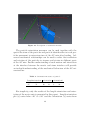
and the aggregates. However, the spatial location of the contact points
between adjacent aggregates is determined in this study and referred
to as the contact geometry.
1.1
Objectives & workflow
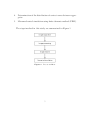
The main objectives of this study are to develop procedures for:
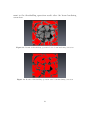
1. Segmentation of the three different phases in AC and determination of their volumetric relationship.
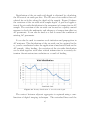
2. Determination of air-voids phase distribution with depth.
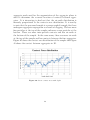
3. Determination of aggregates particle size gradation and distribution.
4