1
6 Analysis of a Parallel Benchmark
5.49756e+11
Idle_strands
y_Ax_omp
y_Ax_omp_block
y_Ax_omp_block_int
2.74878e+11
1.37439e+11
6.87195e+10
16
32
48
64
80
96
112
128
144
Threads
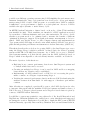
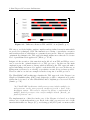
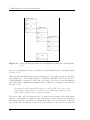
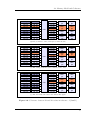
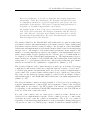
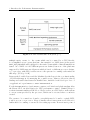
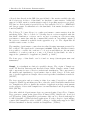
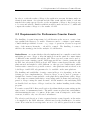
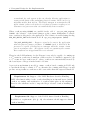
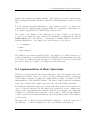
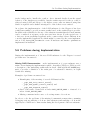
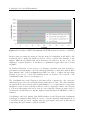
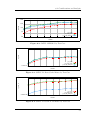
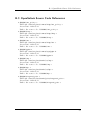
Figure 6.5: SMXV: Idle Strands by Test Case
forming about twice the amount of operations as two IUs per core are available.
Furthermore the smul (integer multiplication) instruction has a latency of 5 cycles
whereas the fmuld (floating-point multiplication on double-words) instruction has a
fixed latency of 6 cycles. [Sun07c, p. 898, p. 901]
Using the facts explained below the following scenario might explain the behavior:
• The LSU seems to be overloaded and can not issue a higher rate of requests to
the L1 cache in order to serve all threads fast enough, which is true for all test
cases
• As the IUs should be capable of about twice the amount of computations in
combination with a lower latency for the execution, the threads are not able to
perform their operations leading to IU pipeline stalls
• The FGU and LSU pipelines seem to perform well when they are used together
and the pipelines seem no to be in stalling states waiting for requests
Given these points at least the overload state can be explained, but the positive
effect while overloading the system resulting in a peak MFLOPS rate can not be
explained. As the LSU should be considered as being overloaded the positive effect
tends to result from another effect. For the overload scenario the operating system is
moreover interesting as it has to serve all threads with a reasonable amount of CPU
time. From this point the native event Idle_strands was used to determine how the
scheduling and dispatching routines perform with the overload situation. Although
this event is designed to count the idle times of a whole core and not a single strand
and the measurements were made using the PICs of all thread, a tendency should be
observable.
82